Urban Puzzle (2014): The Bachelor Project That Shaped My Artistic Research
A retrospective look at Urban Puzzle, my Bachelor project completed at the National University of Arts Bucharest. Awarded the Faculty of Painting Excellence Award, the project marked the beginning of my long-term artistic research into memory, urban landscapes and the traces of human activity.
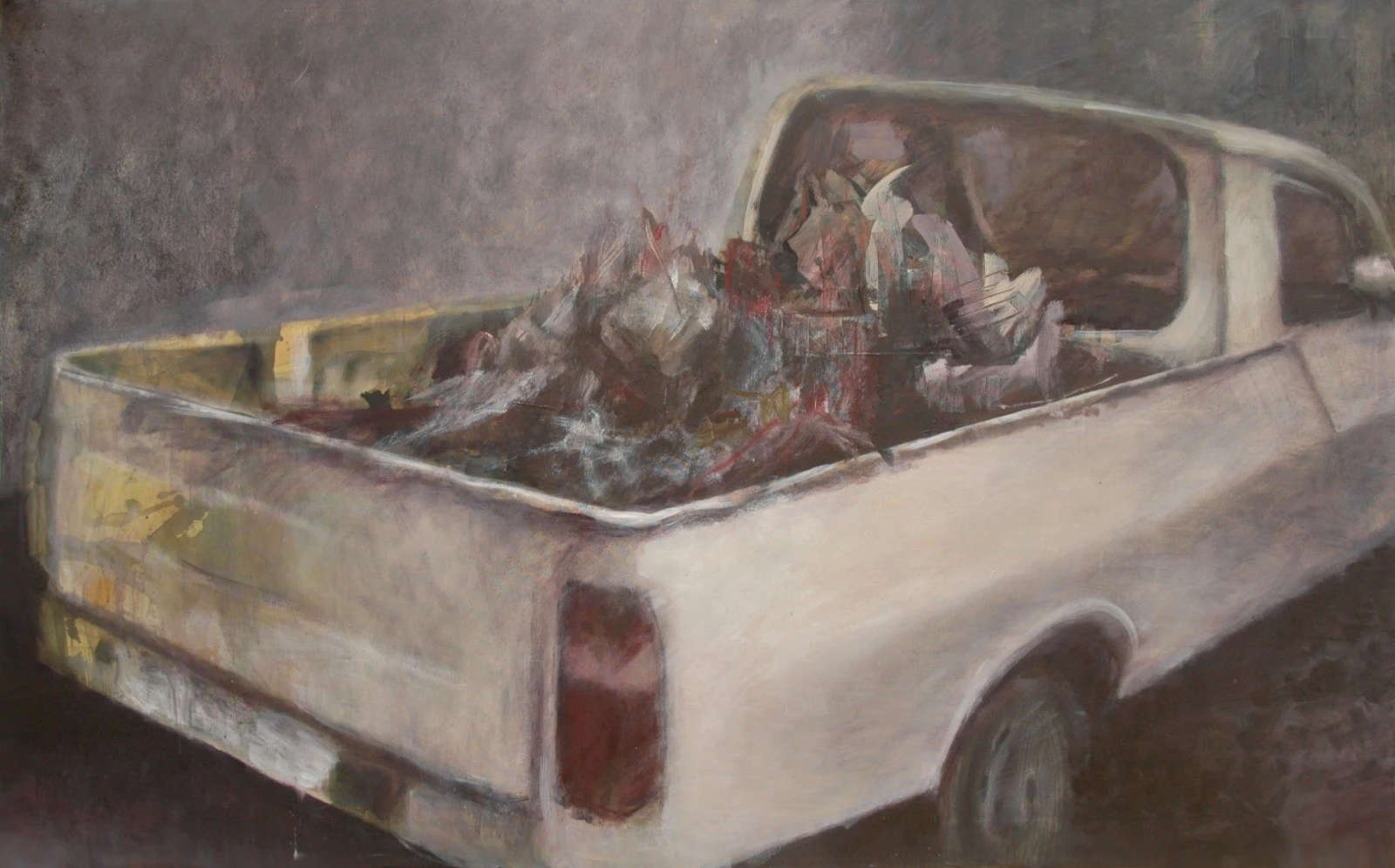
Looking back today, after more than a decade of artistic practice and following international exhibitions such as the Royal Academy Summer Exhibition, the London Art Biennale and Art on a Postcard, I realise that many of the questions that continue to shape my work first emerged during my years as a student.
In 2014, I completed my Bachelor project, Urban Puzzle, at the Faculty of Painting, National University of Arts Bucharest, under the supervision of Professor Marcel Bunea. The project was subsequently awarded the Faculty of Painting Excellence Award, presented by the National University of Arts Bucharest in recognition of its artistic merit.
At the time, I regarded the project as the conclusion of my undergraduate studies.
Today, I see it differently.
Rather than an ending, Urban Puzzle represents the beginning of a line of artistic research that continues to define my practice. While my visual language, materials and pictorial approach have evolved significantly over the years, many of the fundamental questions first explored in this project remain remarkably relevant.
Some answers have changed.
The questions have not.
Part I — Introduction & Context
The Beginning of a Long-Term Investigation
Every artist has a project that quietly changes the direction of their practice.
For me, Urban Puzzle was that project.
Instead of searching for spectacular architecture or iconic city views, I became interested in the overlooked spaces that most people pass without noticing.
Back streets.
Industrial edges.
Discarded objects.
Temporary accumulations of waste.
Places that appeared insignificant but carried the visible traces of everyday human activity.
At the time, I was not consciously thinking about memory as the central theme of my work.
Looking back, however, it becomes clear that this project was already asking how places preserve human presence long after people have disappeared.
That question continues to inform my painting today.
Why the City?
During my student years, the city appeared to me as one of the most revealing portraits of contemporary society.
Buildings and streets were never my primary subject.
What interested me were the subtle signs left behind by everyday life.
Objects abandoned on pavements.
Containers waiting to be emptied.
Improvised storage spaces.
Fragments of architecture transformed by repeated human use.
Rather than presenting an objective portrait of Bucharest, I wanted to understand how urban space reflects social behaviour, consumption and changing systems of value.
In my original dissertation, I described the city as a constantly transforming organism shaped by urbanisation, consumerism and the gradual erosion of shared values. My intention was not to offer social criticism or political conclusions, but to observe how these broader processes become visible through ordinary urban environments.
Looking back today, I would probably describe the project differently.
It was never really about waste.
It was about what remains.
Why Urban Puzzle?
The title emerged naturally during the development of the project.
Rather than producing a single panoramic image of the city, I wanted each painting to function as an independent fragment.
Together, these fragments would construct a larger image — an imaginary puzzle assembled from individual observations.
This approach reflected both the conceptual structure of the project and my working method.
Each painting possessed its own identity while contributing to a broader narrative about contemporary urban life. The title Urban Puzzle expressed precisely this relationship between the individual image and the larger whole.
Interestingly, this way of working has never really disappeared.
My current bodies of work continue to develop through sequences of interconnected paintings rather than isolated individual pieces.
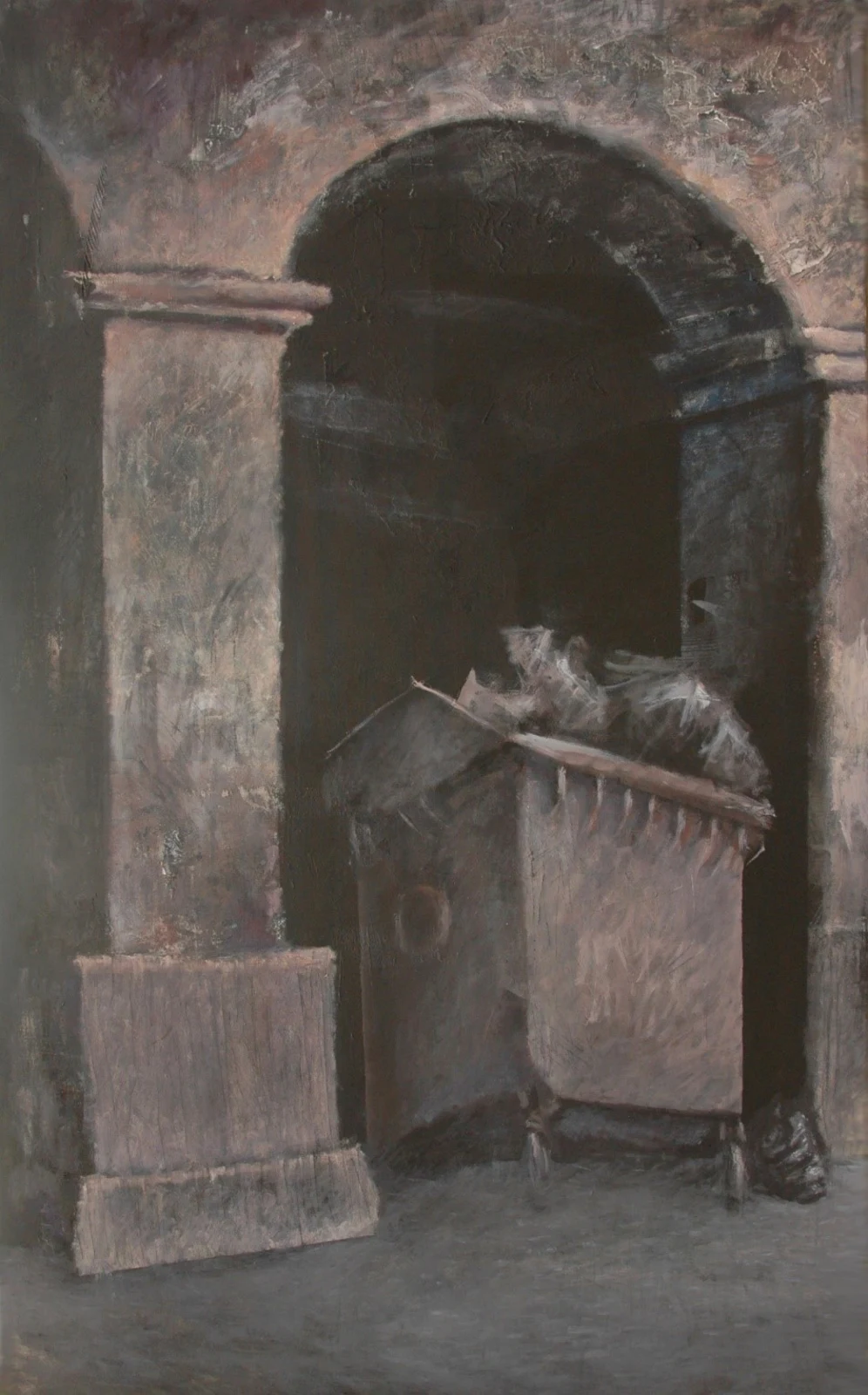
A Question That Never Left
If I had to summarise Urban Puzzle today in a single sentence, it would probably be this:
What remains after us?
In 2014, I searched for answers within the fabric of the contemporary city.
Today, I search for them in post-industrial landscapes, abandoned architecture, cultural memory and the material traces left by time.
The paintings have changed.
The palette has changed.
The scale has changed.
Yet the central question has remained remarkably consistent.
Perhaps that continuity explains why, more than ten years later, Urban Puzzle no longer feels like a university project.
It feels like the first chapter of an artistic investigation that is still unfolding.
Part II — Research & Process
Research Begins Before the Painting
Looking back today, one of the most valuable lessons I took from Urban Puzzle is that painting begins long before the first brushstroke.
For me, every body of work starts with observation.
The studio is only one stage of the process.
Before a painting exists, there is usually a long period of walking, looking, photographing, making notes and learning how to pay attention to places that most people overlook.
Although my working methods have evolved considerably since 2014, this principle has remained constant throughout my practice.
Painting begins outside the studio.
Walking Through the City
The research behind Urban Puzzle did not begin with books or with sketches.
It began by walking through Bucharest.
For weeks, I wandered through different neighbourhoods carrying a camera, photographing fragments of the city that appeared visually insignificant but conceptually rich.
I was not searching for landmarks.
I was searching for evidence.
Discarded furniture.
Overflowing containers.
Temporary accumulations of waste.
Improvised storage spaces.
Corners of the city shaped by repeated human activity rather than by architectural intention.
At the time, these places seemed to exist outside the visual vocabulary of contemporary painting.
That was precisely what attracted me to them.
The City as an Archive
During this period I gradually stopped seeing the city as a collection of buildings.
Instead, I began to understand it as an archive.
Every abandoned object recorded a decision.
Every damaged surface suggested the passage of time.
Every discarded material carried traces of anonymous lives.
These objects interested me not because they were unusual, but because they revealed ordinary human behaviour.
The paintings were therefore never intended as representations of rubbish.
They became observations about memory, permanence and the fragile relationship between people and the environments they create.
Although I did not yet use the word memory as the central concept of my work, I now recognise that it was already present beneath the surface of the project.
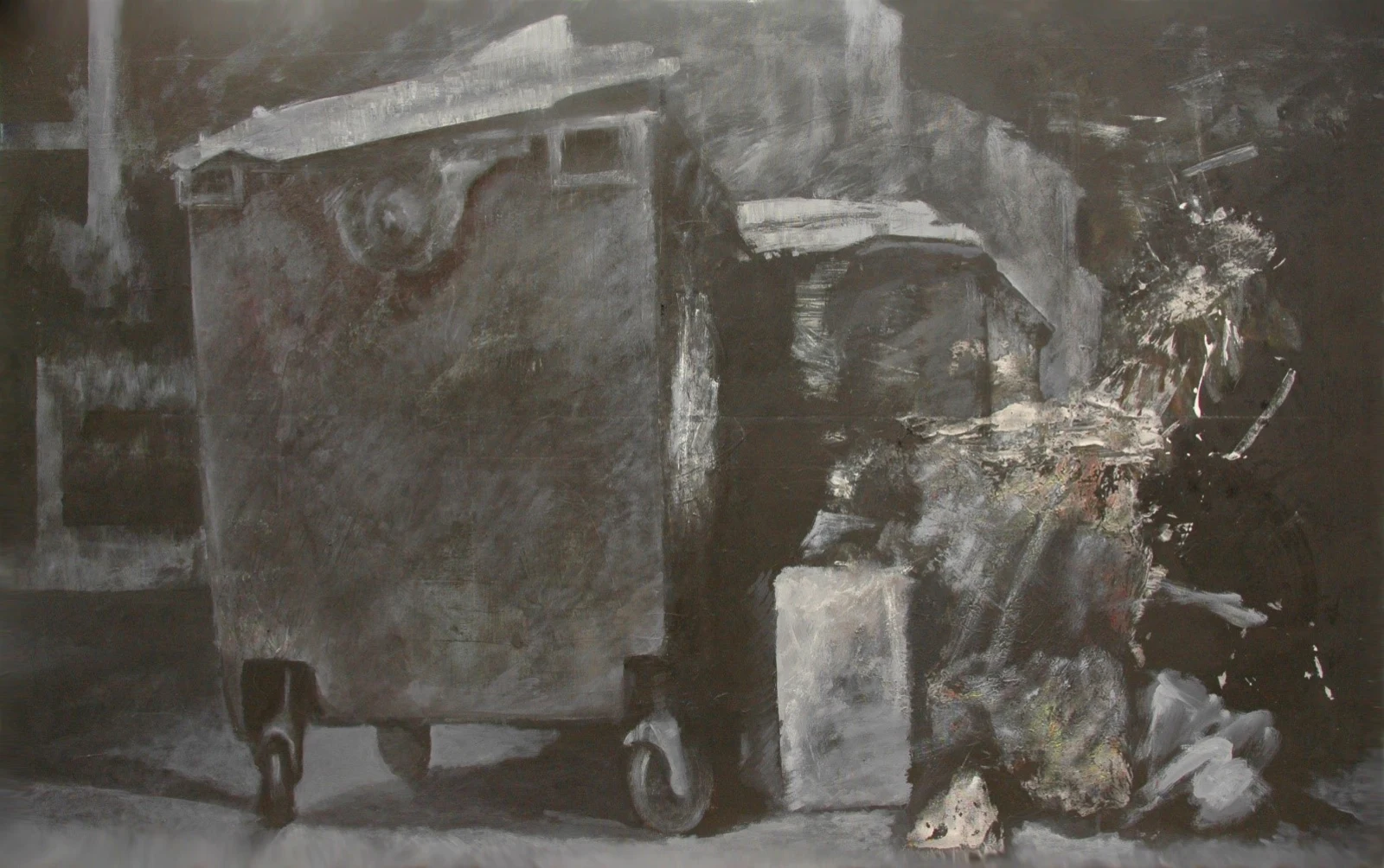
Building a Visual Archive
The research gradually became more systematic.
At first I photographed almost everything that caught my attention.
Later, as the project became more focused, I started selecting only those scenes that reflected the questions I wanted the paintings to explore.
By the end of the research period, I had produced an archive of more than two hundred photographs, documenting different parts of Bucharest under varying light conditions and at different times of day. These photographs became the visual foundation of the entire series.
Looking back today, I no longer see this archive simply as reference material.
It was the beginning of a research methodology that continues to inform my work.
From Photography to Painting
Photography was never the final destination.
It was only the starting point.
Back in the studio, the process changed completely.
Photographs were carefully reviewed.
Sketches were produced.
Compositions were simplified.
Unnecessary information disappeared.
Gradually, documentary images evolved into paintings.
The goal was never to reproduce reality with precision.
Instead, I wanted each painting to communicate something that photography alone could not express.
As described in my dissertation, the process moved from observation to photography, from photography to drawing, and finally from drawing to painting, with every stage removing unnecessary visual information while strengthening the composition.
This approach still defines the way I work today.
Learning Through Reduction
Perhaps the most important discovery made during Urban Puzzle was that painting often becomes stronger through reduction rather than accumulation.
Instead of adding more information, I gradually learned to remove it.
The more carefully I edited the image, the more clearly the essential relationships became visible.
This way of thinking has remained central to my practice.
Although my recent paintings differ considerably from those produced in 2014, they continue to rely on the same principle:
every visual element must justify its presence.
Nothing should remain simply because it exists in reality.
Human Presence Through Absence
One aspect of Urban Puzzle that still interests me today is the almost complete absence of people.
Although every painting speaks about human activity, the human figure rarely appears.
Instead, presence is suggested indirectly.
Through discarded objects.
Through altered spaces.
Through traces left behind.
In my original dissertation, I observed that the emotional tension of the project emerged precisely from this paradox: people remained invisible, while their actions became unmistakably present within the landscape.
Looking back, I realise that this idea has continued throughout my artistic practice.
Even today, I am often less interested in representing people than in representing the evidence of their existence.
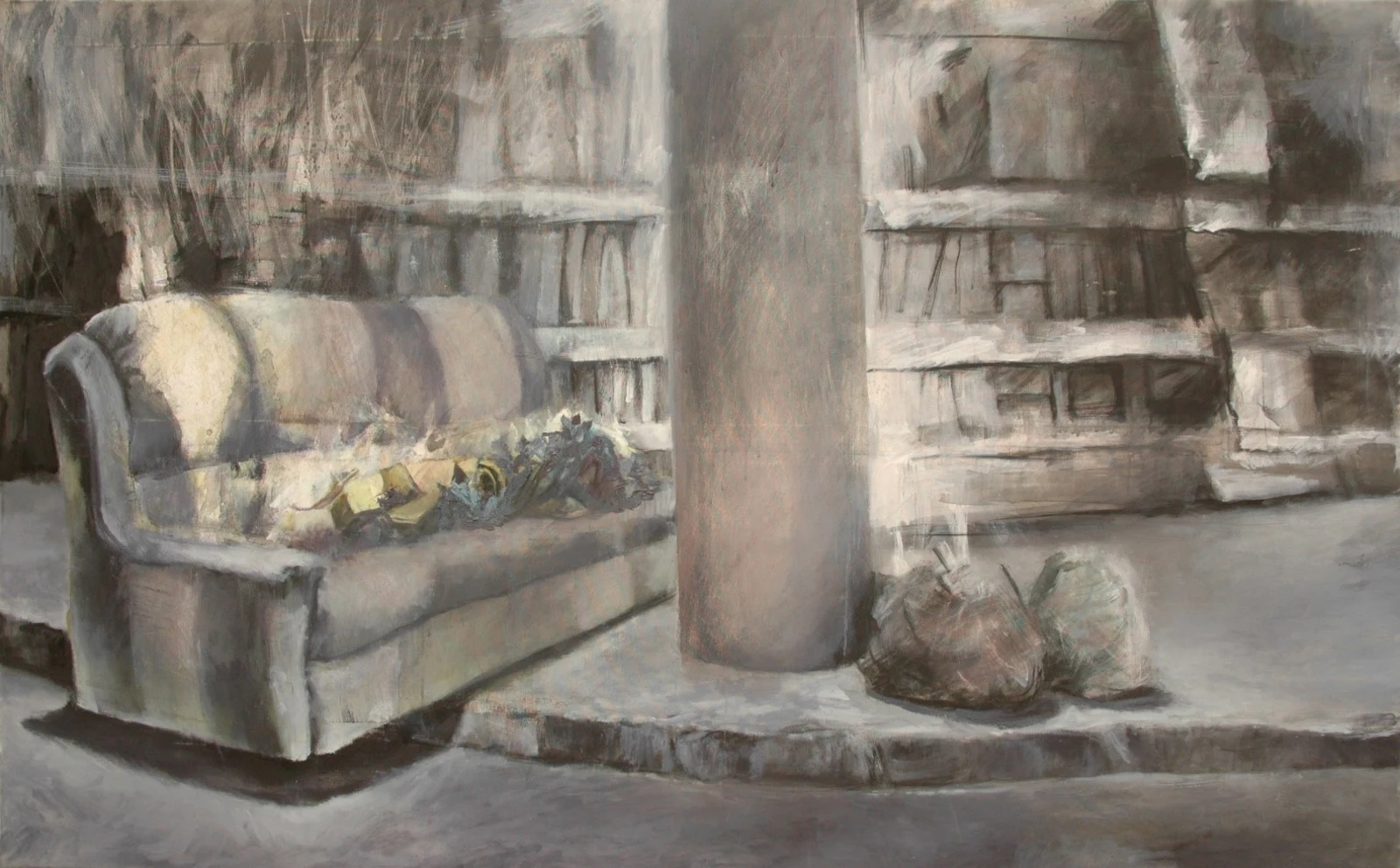
A Working Method That Endured
More than ten years have passed since Urban Puzzle, yet its methodology remains surprisingly familiar.
Observation.
Walking.
Photography.
Drawing.
Selection.
Reduction.
Painting.
The visual language has changed considerably.
My understanding of landscape has deepened.
The conceptual framework has expanded.
Yet the essential process remains remarkably similar.
For me, painting is still rooted in careful observation before it becomes an act of interpretation.
Perhaps that is why Urban Puzzle feels less like an early student project and more like the beginning of a way of working that continues to shape everything I paint today.
Part III — Influences & Artistic Development
Learning Through Other Artists
Every artist begins by looking closely at the work of others.
The challenge is not to avoid influence, but to move through it and gradually discover a personal visual language.
Looking back at Urban Puzzle, I can clearly identify the artists and writers who helped shape my thinking during those years.
What interests me today, however, is not how much I learned from them, but how those influences gradually dissolved into a language that became my own.
Edward Hopper and the Power of Silence
Among the painters I studied during the development of Urban Puzzle, Edward Hopper probably had the greatest impact.
It was never his subject matter that interested me most.
Nor was it his style.
What fascinated me was his ability to transform ordinary places into psychologically charged spaces.
His paintings demonstrate that atmosphere does not depend on dramatic events.
Silence itself can become the subject.
While researching the project, I carefully studied not only Hopper's finished paintings but also his preparatory drawings and compositional studies, trying to understand how an image is constructed long before colour is applied. This process became an important point of reference during the development of Urban Puzzle.
Looking back today, I no longer recognise Hopper's influence in the appearance of my paintings.
I recognise it in the way I think about painting.
A painting does not need to explain.
It needs to create a space in which reflection becomes possible.
Theory as a Tool, Not a Destination
Alongside painting, I spent much of that period reading.
Jean Baudrillard.
Umberto Eco.
Karl Rosenkranz.
Thierry de Duve.
Tudor Vianu.
Their writings introduced questions about aesthetics, representation, simulation and the relationship between art and society. Rather than providing answers, these texts encouraged me to think more critically about the images I was making and the ideas that supported them.
Looking back now, I realise that theory never dictated my paintings.
Instead, it helped me develop a habit that has remained essential throughout my practice:
to ask why an image should exist before deciding how it should look.
Beyond Consumerism
When Urban Puzzle was created, much of my writing focused on urbanisation, consumerism and waste.
Those concepts reflected the concerns of the project at that time.
Today, I would describe the work differently.
The paintings were never really about rubbish.
Nor were they intended as social criticism.
The discarded objects mattered because they revealed something about the people who had left them behind.
They became evidence.
Fragments of memory.
Material traces of anonymous lives.
Over time, my interest shifted away from consumerism itself and towards a broader investigation into memory, absence and the way landscapes preserve human history.
In retrospect, Urban Puzzle already contained the foundations of that transition.
Seven Paintings, One Investigation
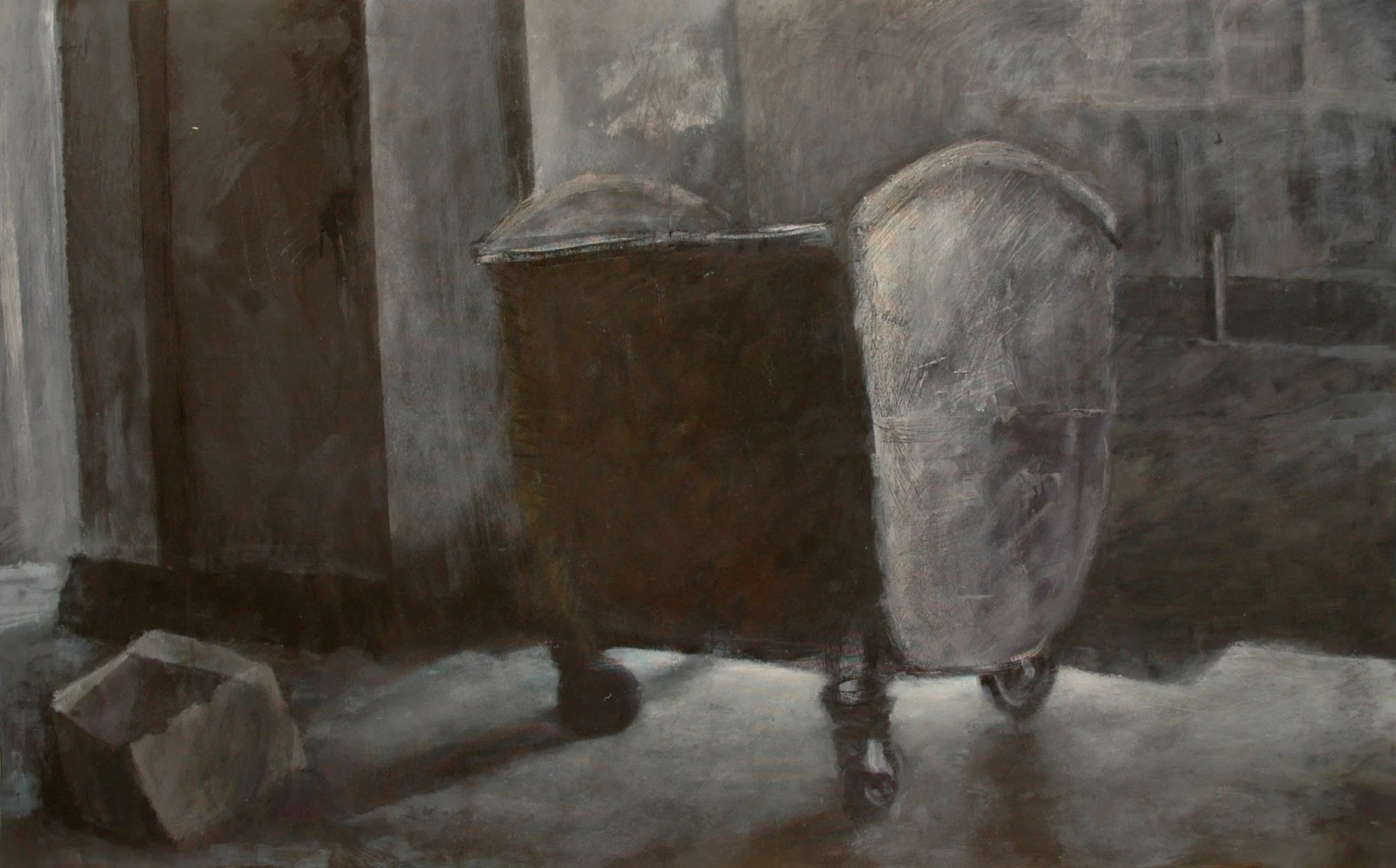
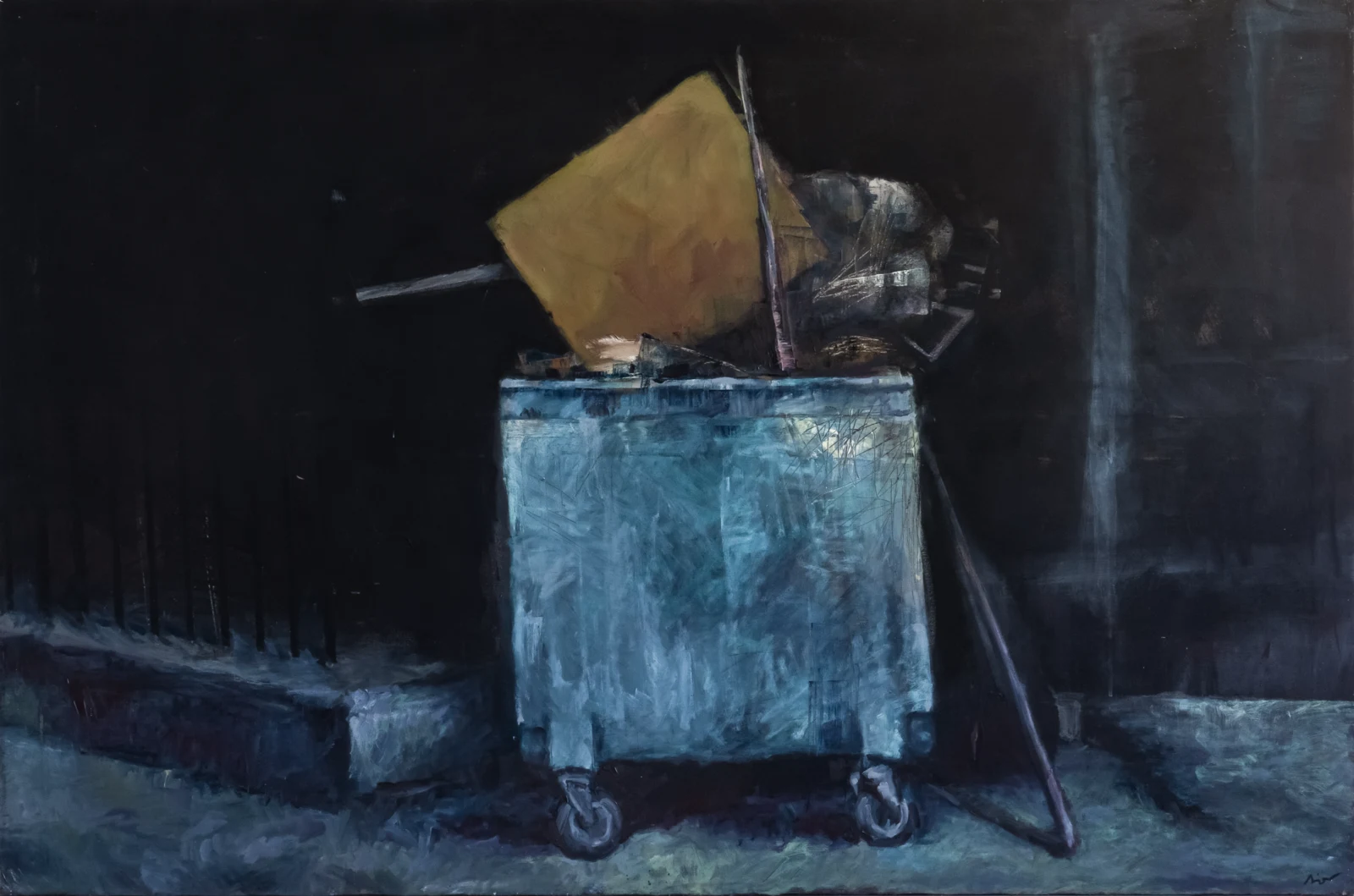
The final project consisted of seven large-scale paintings:
Night Recycle Bin Garbage in the Street Golden Garbage National Garbage Sofa Garbage Ghetto Garbage Garbage Columns
Today, I no longer see them as seven independent works.
I see them as seven chapters of a single investigation.
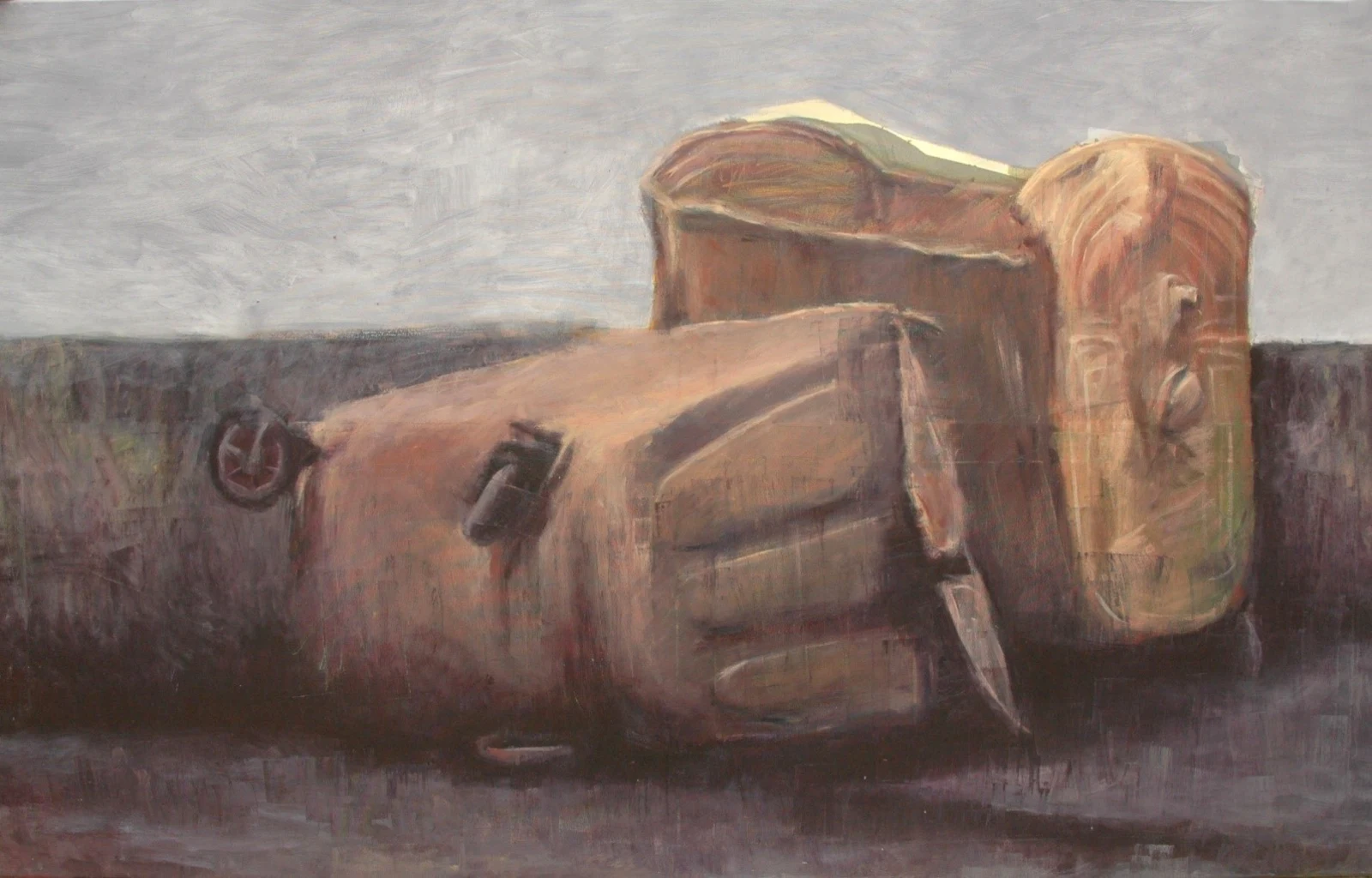
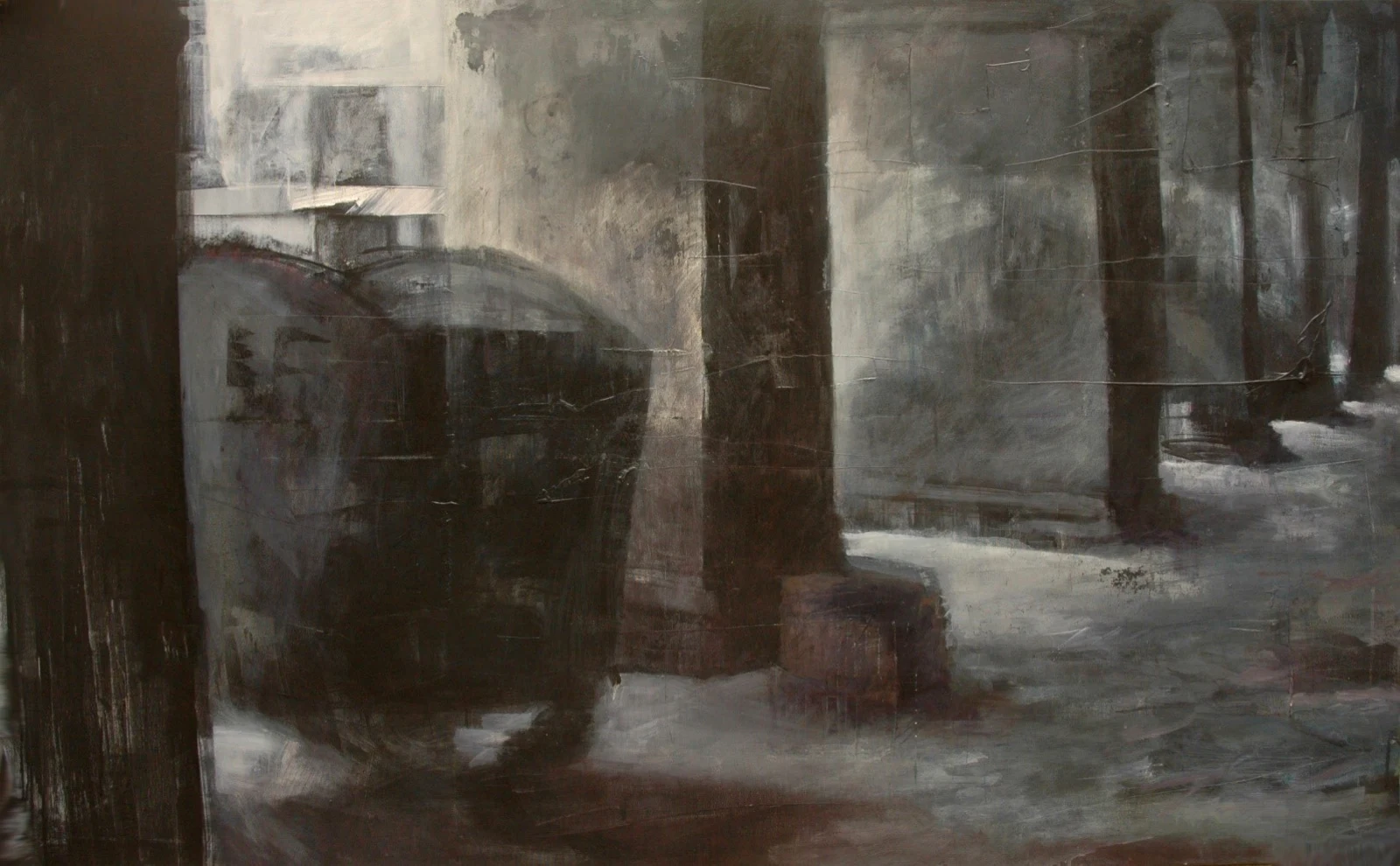
Each painting explored a different fragment of urban reality, yet all were connected by the same underlying question:
how can painting reveal the hidden narratives embedded within ordinary places?
This idea of developing a subject through an interconnected body of work has remained central to my practice ever since.
Rather than searching for a single definitive image, I have always preferred to build meaning gradually, through series that evolve over time.
The Faculty of Painting Excellence Award
Following its presentation at the National University of Arts Bucharest, Urban Puzzle received the Faculty of Painting Excellence Award in 2014. For a young artist completing his undergraduate studies, this recognition was both encouraging and deeply meaningful.
Looking back today, however, I see the award differently.
Its importance lies not only in the distinction itself, but in what it represented.
It confirmed that the questions I was asking through painting deserved to be pursued further.
More importantly, it gave me the confidence to continue developing an artistic practice built on long-term research rather than isolated projects.
The Beginning of Something Larger
When Urban Puzzle was completed, I believed I had finished a university project.
In reality, I had only completed its first chapter.
Over the following years, many aspects of my work changed.
The scale became more ambitious.
The visual language became increasingly distilled.
Colour assumed a different role.
The conceptual framework expanded.
Yet the essential concerns remained remarkably consistent.
Looking back now, I can clearly trace a continuous line from Urban Puzzle to later bodies of work such as Industrial Landscapes, Garbage and, perhaps more unexpectedly, Seeds.
Although these series differ significantly in appearance, they all explore the same enduring questions about memory, time and the traces of human existence.
Rather than representing separate projects, they form different stages of a single artistic investigation — one that began quietly in a university studio and continues to evolve today.
Part IV — Looking Back, Conclusion & SEO
Looking Back After More Than a Decade
Time changes the way we understand our own work.
More than ten years have passed since Urban Puzzle was completed, and that distance has allowed me to see the project with greater clarity.
I no longer look at it through the eyes of a student completing his degree.
I look at it as an artist reflecting on the origins of a practice that has continued to evolve over more than a decade.
Some paintings would undoubtedly be approached differently today.
The compositions have become more distilled.
My use of colour has changed considerably.
The relationship between realism and abstraction has become more fluid.
Yet despite these transformations, I immediately recognise the questions that first emerged during Urban Puzzle.
The paintings belong to another stage of my development.
The research does not.
What Has Remained
Over the years my work has expanded in many directions.
The visual language has matured.
The scale has changed.
New materials have entered my practice.
My understanding of landscape has become broader and more complex.
What has remained remarkably consistent, however, is my interest in the traces left by human activity.
Today these traces appear in post-industrial landscapes, abandoned architecture, cultural heritage and seemingly ordinary objects that carry invisible histories.
Looking back, I realise that Urban Puzzle was the first attempt to understand these relationships.
The project was less concerned with the appearance of the city than with the stories embedded within it.
That remains true today.
Beyond the Urban Landscape
When I completed my Bachelor project, I believed I was painting the city.
In retrospect, I understand that the city was only the setting.
The real subject was always the relationship between people and the environments they shape.
This shift in perspective explains the natural evolution of my later work.
The focus gradually moved beyond contemporary urban space towards industrial landscapes, abandoned places, cultural memory and the fragile dialogue between permanence and disappearance.
Although these later bodies of work appear visually different, they continue to investigate the same essential questions first explored in Urban Puzzle.
Rather than separate projects, they represent successive chapters of a single artistic investigation.
Painting as Long-Term Research
One lesson has become increasingly important throughout my career.
I no longer think of painting as a sequence of isolated exhibitions or individual works.
Instead, I understand it as a continuous form of research.
Some questions require years to unfold.
Others remain unresolved for decades.
That, I believe, is one of the strengths of painting.
It does not demand immediate conclusions.
It allows ideas to mature gradually through images rather than through definitive answers.
Seen from this perspective, Urban Puzzle was never simply a Bachelor project.
It became the first chapter of an investigation that still informs every new body of work I develop.
The Award and Its Meaning Today
Receiving the Faculty of Painting Excellence Award from the National University of Arts Bucharest in 2014 represented an important moment at the beginning of my professional journey. It offered encouragement at a time when I was still searching for my own artistic language and confirmed that the direction I had chosen deserved to be pursued further.
Looking back today, however, I believe the award itself is not the most significant aspect of the project.
What matters most is that many of the questions explored in Urban Puzzle have remained central to my artistic practice.
Recognition belongs to a particular moment.
Research continues.
Why I Am Publishing This Project Today
More than a decade has passed since Urban Puzzle was presented.
So why return to it now?
Because I believe an artist's early work deserves to be understood as part of a longer journey.
It reveals where certain ideas began.
It makes visible the continuity that often remains hidden behind stylistic change.
Publishing this project today is not an act of nostalgia.
Nor is it an attempt to preserve an academic exercise.
It is an opportunity to document the origins of a way of thinking that continues to shape my work.
The paintings themselves belong to 2014.
The questions they ask still belong to the present.
Conclusion
Looking back today, I no longer see Urban Puzzle as the conclusion of my university education.
I see it as the beginning of an artistic methodology.
It was the first project in which observation, photography, drawing, theoretical research and painting became part of a single process.
More importantly, it was the first time I understood that painting could function as a sustained investigation rather than as a series of independent images.
That understanding continues to guide my work.
From Industrial Landscapes to Garbage, from Seeds to my most recent paintings, every body of work remains connected by a common question:
How can painting preserve the traces of human experience before they disappear into memory?
Perhaps there is no final answer.
Perhaps painting itself is the search.
And when I look back at Urban Puzzle today, I recognise not the end of my education, but the quiet beginning of everything that followed — a research that continues to shape my artistic practice. For collaborations, acquisitions or press, feel free to get in touch through the contact page.
Frequently Asked Questions
What is Urban Puzzle?
Urban Puzzle is my Bachelor project, completed in 2014 at the Faculty of Painting, National University of Arts Bucharest. It explored urban landscapes, memory and the traces of human activity through a series of seven large-scale oil paintings.
Was the project recognised?
Yes. In 2014, Urban Puzzle received the Faculty of Painting Excellence Award, presented by the National University of Arts Bucharest in recognition of the project's artistic quality.
Why is the project still relevant today?
Although the paintings were created more than a decade ago, many of the ideas first explored in Urban Puzzle continue to shape my current artistic practice, particularly my long-term investigations into memory, landscape and material traces.
Is Urban Puzzle connected to your later work?
Absolutely. I now see the project as the conceptual starting point for later bodies of work such as Industrial Landscapes, Garbage and Seeds. Rather than isolated series, they represent different stages of the same ongoing artistic research.
Further Reading
- Royal Academy Summer Exhibition 2024 – A Milestone in My Artistic Journey — the international exhibition that grew out of this same research
- London Art Biennale 2023 — My Experience as a Selected Artist — another international exhibition, through open call
- Art on a Postcard 2024 — the charity auction where two Seeds paintings found new homes
- Series — Seeds, Industrial Landscapes and Garbage, the bodies of work this research grew into
- Series & Works — the archive of my paintings
- Selected Exhibitions — the full record of past and upcoming exhibitions
- About — my artistic path and practice
- Contact — get in touch about my work
Editorial note: this article is a personal, retrospective account of my 2014 Bachelor project, written more than a decade later. It combines excerpts and ideas from the original dissertation with my current reflection on how that research shaped the practice I develop today.