Royal Academy Summer Exhibition 2024 – A Milestone in My Artistic Journey
A first-hand account of exhibiting at the Royal Academy Summer Exhibition 2024, from the selection process and artwork delivery to the Private View and the sale of my painting for £6,000.
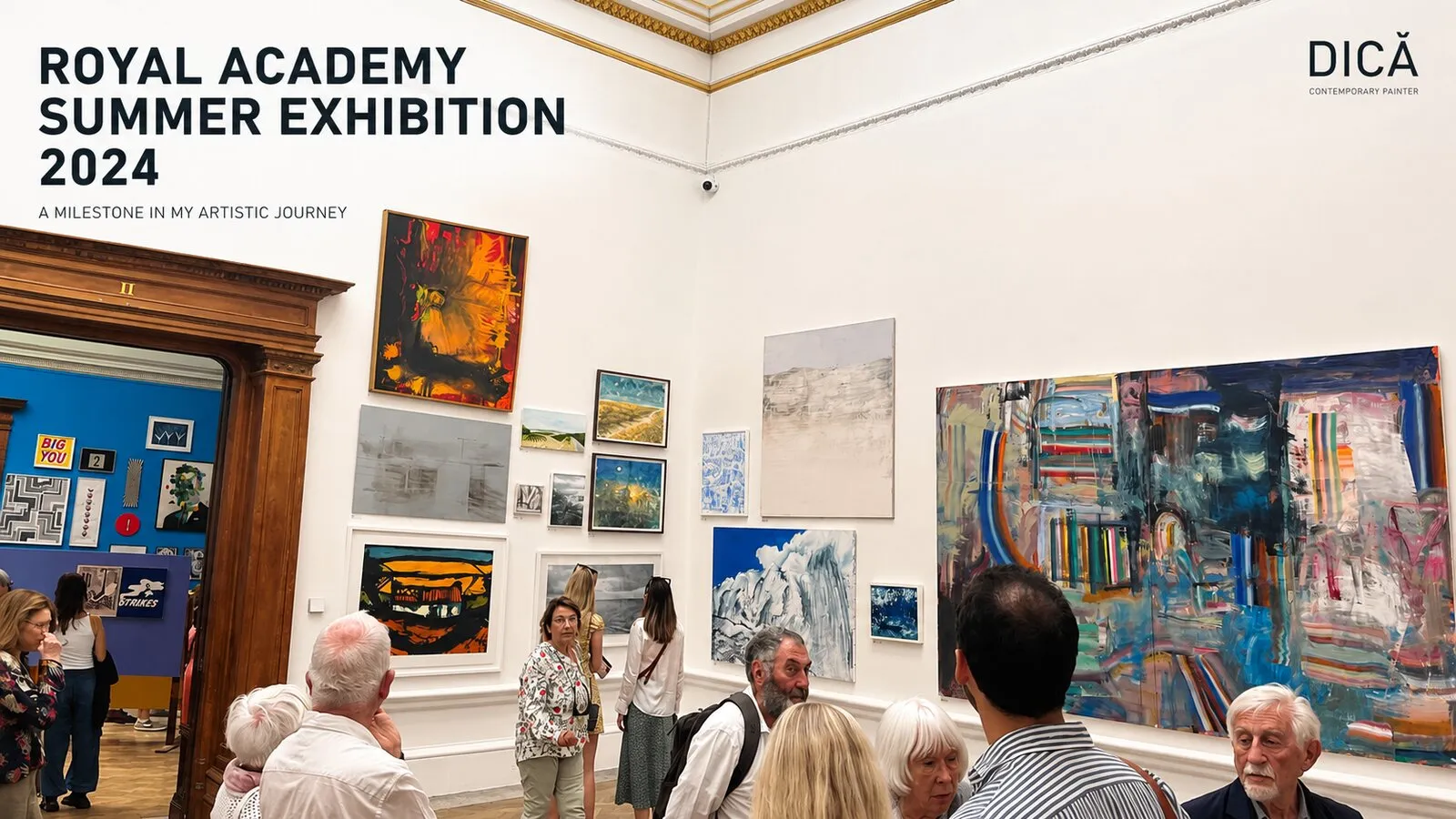
Being selected for the Royal Academy Summer Exhibition 2024 in London has been one of the defining moments of my career as a contemporary painter.
For artists working independently, without permanent representation by an international gallery, opportunities of this scale are rare. The Summer Exhibition is not only one of the oldest open-submission exhibitions in the world, but also one of the few places where emerging and established artists exhibit alongside Royal Academicians within the same institution.
For me, this experience became even more memorable when my painting was acquired during the Private View, before the exhibition officially opened to the public, for £6,000.
This article combines my personal experience with practical information for artists who are considering applying to future editions of the Royal Academy Summer Exhibition. I hope it offers both insight into the process and encouragement to those preparing their own submissions.
What is the Royal Academy Summer Exhibition?
Founded in 1769, the Royal Academy Summer Exhibition is widely recognised as the world's longest-running open-submission exhibition.
Organised annually by the Royal Academy of Arts in London, it brings together thousands of works by established artists, Royal Academicians and artists selected through an international open call.
Every year, the exhibition presents painting, sculpture, printmaking, photography, architecture and installation, creating an extraordinary overview of contemporary artistic practice.
One of the exhibition's defining characteristics is that every edition is coordinated by a different Royal Academician, resulting in a unique curatorial vision while preserving the institution's longstanding tradition.
Why does the Summer Exhibition Matter?
Many artists see the Summer Exhibition as much more than an annual exhibition.
It represents an opportunity to present their work within one of the United Kingdom's most respected cultural institutions.
Unlike commercial galleries, the Royal Academy Summer Exhibition is built around the idea of open submission. Every artist, regardless of career stage or representation, has the possibility to submit work for consideration.
That does not make the process easier.
On the contrary.
Each year thousands of submissions compete for a limited number of exhibition spaces, making the selection highly competitive.
For artists working outside the UK, being selected also demonstrates that their work can communicate across cultural and geographical boundaries.
My Decision to Apply
My practice has developed around painting as a form of research.
Over the past several years I have investigated themes such as industrial landscapes, memory, material traces and the coexistence of beauty and decay — the core concerns of my painting series.
Rather than documenting abandoned places, I use landscape as a metaphor for human experience, allowing colour, texture and material to transform familiar environments into psychological spaces.
Submitting work to the Royal Academy was therefore not simply an attempt to exhibit internationally.
It was an opportunity to test whether a body of research developed over many years could enter into dialogue with one of the world's most respected artistic communities.
Understanding the Selection Process
Before applying, I spent considerable time studying the Royal Academy's submission guidelines.
The process is more rigorous than many artists realise.
It begins with an online application, where artists submit digital images of their work together with technical information and the required entry fee.
These digital submissions form the basis of the first round of selection.
Artists whose work passes this stage are then invited to deliver the original artwork to the Royal Academy for physical inspection.
This is an important distinction.
Being shortlisted does not automatically mean that the work has been accepted into the exhibition.
The final decision is made only after the selection committee has examined the artwork in person.
Understanding this process helped me prepare not only the artwork itself but also the logistics surrounding transportation and delivery. The official entry information and FAQ explain these stages in detail and are worth reading closely before applying.
Choosing the Artwork
Selecting which painting to submit proved more difficult than completing the application itself.
Rather than choosing my newest work, I decided to submit the painting that I believed best represented the direction of my practice.
Looking back, I still believe this was the right decision.
Competitions of this level rarely reward novelty alone.
They reward coherence, authenticity and artistic conviction.
A painting submitted to the Royal Academy should not simply be technically accomplished.
It should communicate a personal visual language developed over time.
Preparing for the Next Stage
Receiving confirmation that my work had passed the first stage of selection marked the beginning of an entirely different challenge.
The focus shifted from artistic decisions to practical ones.
Transport, insurance, scheduling and compliance with the Royal Academy's delivery requirements suddenly became just as important as the painting itself.
Although these aspects are often overlooked, they form an essential part of participating professionally in international exhibitions.
Preparing the Artwork for London
Receiving confirmation that my painting had passed the first stage of selection was an exciting moment, but it also marked the beginning of a completely different challenge.
From that point onward, the focus shifted from artistic decisions to logistics.
The painting now had to travel safely from Romania to London, arrive within the delivery window assigned by the Royal Academy, comply with all submission requirements and reach the selection committee in perfect condition.
For artists living outside the United Kingdom, this part of the process requires careful planning. A damaged frame, a delayed shipment or an incorrectly prepared artwork can jeopardise months — or even years — of work.
International Transport
Unlike many local exhibitions, participating in the Royal Academy Summer Exhibition involves international logistics for artists coming from abroad.
The Royal Academy provides each shortlisted artist with a specific delivery date and time slot. These appointments are carefully scheduled to allow hundreds of artworks to be received efficiently over a limited number of days.
Missing the allocated delivery slot is not an option.
Because my painting was large and required careful handling, I decided to organise transport well in advance rather than relying on last-minute solutions.
Planning ahead significantly reduced the risk of delays and allowed me to focus on presenting the work professionally.
Working with Rocket Van
For the final stage of transportation in London, I worked with Rocket Van, a company experienced in moving artworks and exhibition materials across the city.
Choosing a local transport company gave me confidence that the painting would arrive at the Royal Academy on schedule and in excellent condition.
The experience was smooth and professional from beginning to end.
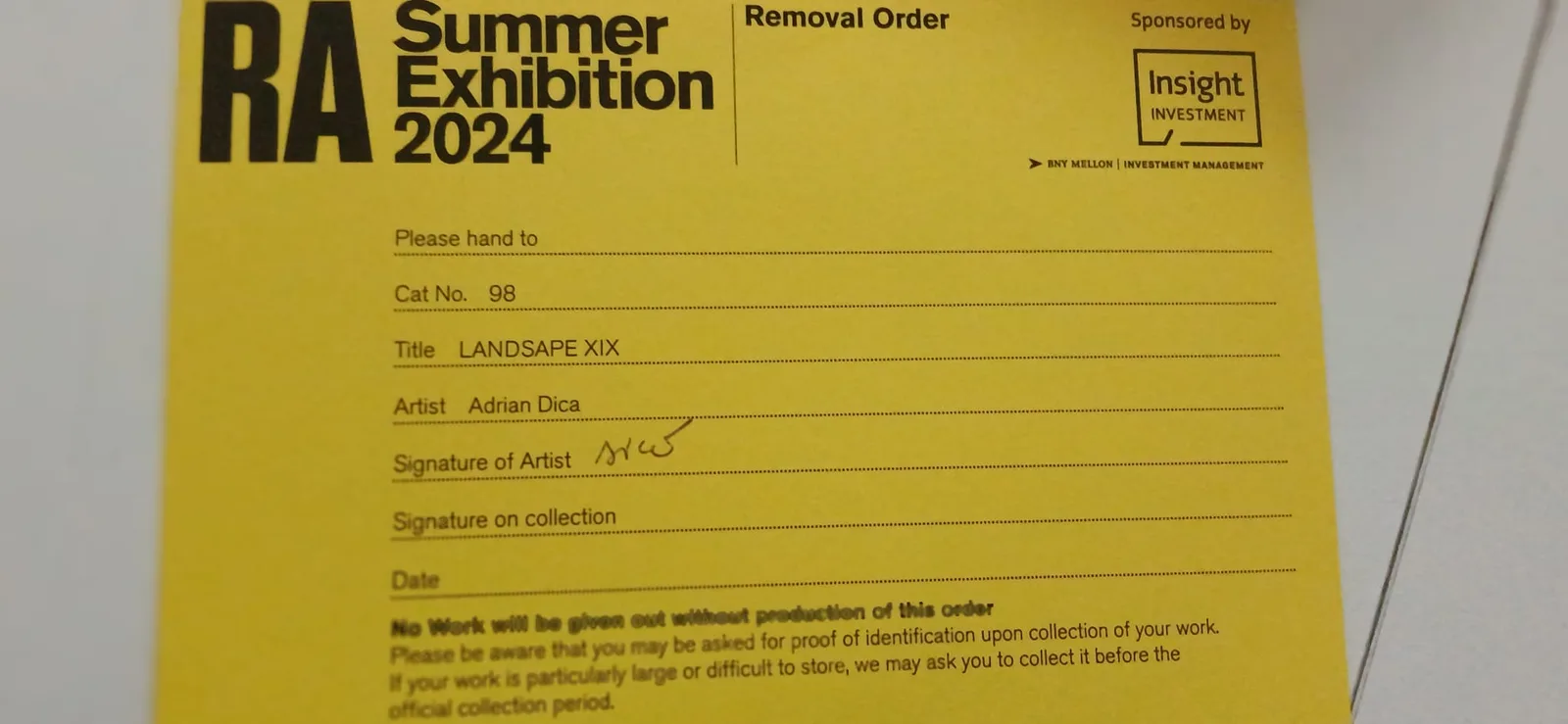
The painting was delivered to the Royal Academy during the official delivery period established by the Summer Exhibition regulations and handed directly to members of the Academy's staff.
For artists travelling from outside the UK, working with an experienced local transport company can remove a significant amount of stress from the process.
Delivering the Painting to the Royal Academy
Arriving at Burlington House on the designated delivery day was an experience in itself.
Throughout the day, artists, couriers and transport companies arrived one after another carrying paintings, sculptures, prints and installations from across the United Kingdom and many other countries.
Although each artist had been assigned a precise delivery slot, the atmosphere was remarkably calm and well organised.
Once inside, the painting was carefully checked against the submission documentation before being formally accepted by members of the Royal Academy's staff.
At that point, my role as the artist effectively came to an end.
The painting was now in the hands of the selection committee.
An Important Detail Many Artists Overlook
One common misconception is that delivering an artwork to the Royal Academy automatically means it has been accepted into the exhibition.
This is not the case.
After the initial digital selection, every shortlisted work is physically examined by the Summer Exhibition Selection Committee.
Only after this second stage are the final exhibiting works confirmed.
Understanding this distinction is essential for anyone considering applying.
Passing the first round is a significant achievement, but the final decision depends on the physical presence, quality and overall dialogue of the artwork within the exhibition.
The Real Cost of Participating
People often assume that exhibiting at the Royal Academy is financially straightforward once a work has been selected.
In reality, participation involves several unavoidable expenses that artists should consider before applying.
In my own case, the overall cost of participating was approximately £500. This included:
- the official entry fee
- international transportation
- insurance for the artwork during transit
Additional expenses such as accommodation, flights and personal travel can also increase the overall budget if the artist wishes to attend the exhibition and related events.
Although these costs represent a significant personal investment, I viewed them as part of my professional development rather than simply as exhibition expenses.
Waiting for the Final Decision
After delivering the painting, there is very little an artist can do except wait.
The selection committee reviews every shortlisted artwork in person before deciding which works will become part of the final exhibition.
This waiting period is perhaps the most psychologically demanding stage of the entire process.
The painting has already travelled hundreds or even thousands of kilometres.
Months of preparation have led to this point.
Now the outcome depends entirely on the committee's assessment.
For me, these days reinforced an important lesson.
Professional practice is not only about making paintings.
It is also about trusting the work once it leaves the studio.
Confirmation
Receiving the final confirmation that my painting had been accepted into the Royal Academy Summer Exhibition 2024 was one of the most rewarding moments of my career.
Beyond the excitement of exhibiting in London, it represented recognition of a body of work developed over many years through continuous research and studio practice.
For independent artists, moments like these provide something more valuable than visibility alone.
They demonstrate that sustained artistic research can resonate beyond national borders and become part of an international conversation.
Looking Beyond Logistics
While transport, insurance and organisation are essential, they remain only the practical framework surrounding the artwork.
Ultimately, none of these elements can replace years of consistent studio practice.
Applications, documentation and logistics may open the door, but it is the artwork itself that must ultimately justify its place within the exhibition.
That, perhaps, is the most valuable lesson I took from this stage of the process.
The Private View – A Night I Will Never Forget
For many artists, the Private View is the true beginning of the Royal Academy Summer Exhibition.
Before the exhibition opens to the public, the Royal Academy hosts an exclusive preview evening attended by Royal Academicians, collectors, patrons, curators, museum professionals, journalists and invited guests. It is not only a celebration of the exhibition but also one of the most important networking events in the British art calendar.
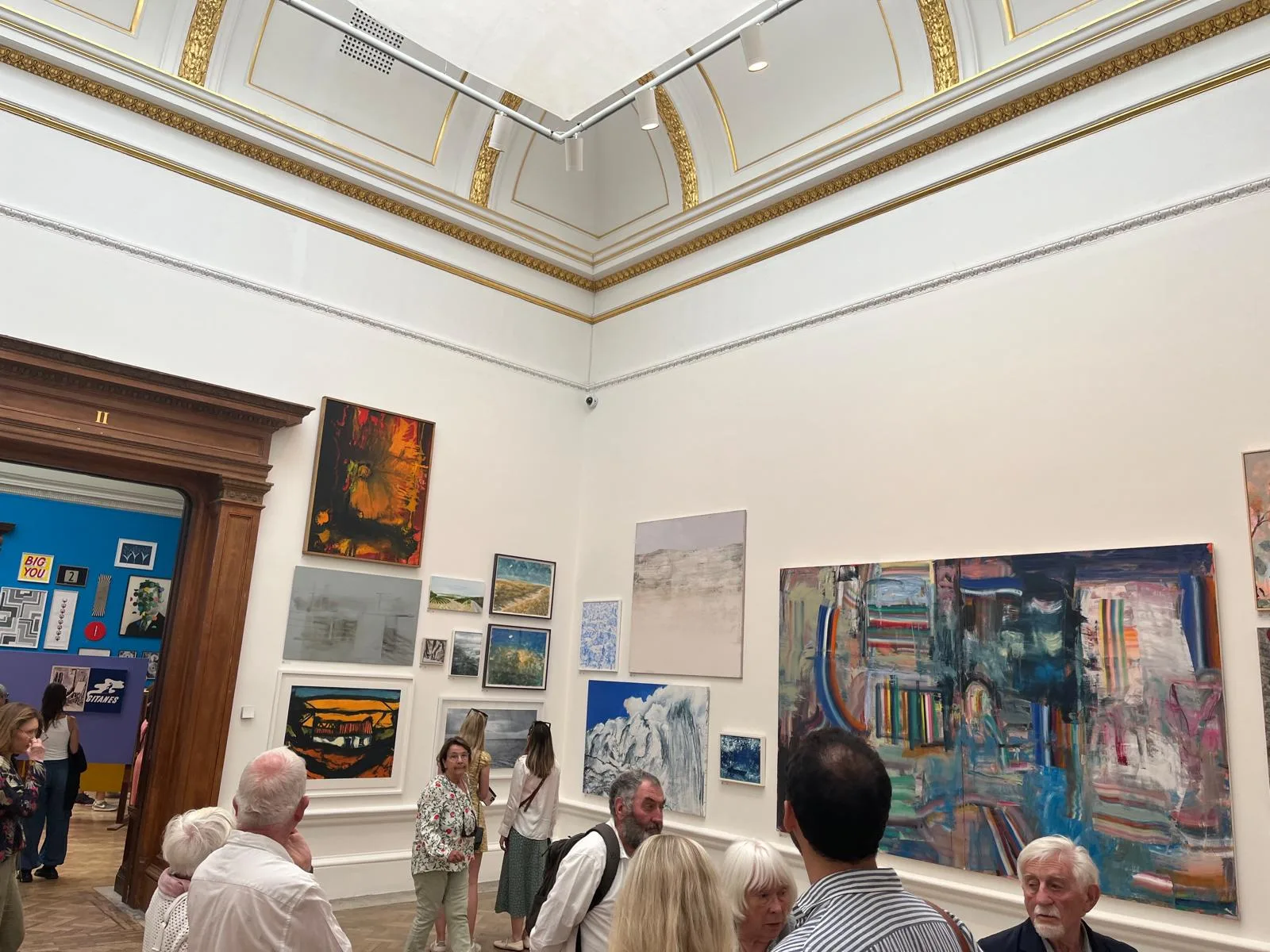
Walking through the galleries before the public opening is an extraordinary experience. Thousands of visitors move through the historic rooms of Burlington House, discovering hundreds of artworks displayed from floor to ceiling in the distinctive style that has become synonymous with the Summer Exhibition.
For the exhibiting artists, it is the first opportunity to see their work installed within the final curatorial vision of the exhibition.
Seeing My Painting Installed
Until that evening, I had only imagined how my painting would appear within the Royal Academy galleries.
Like every exhibiting artist, I had delivered the work weeks earlier and entrusted it entirely to the exhibition team.
Seeing it finally installed was a remarkable moment.
A painting always changes once it leaves the studio.
Its meaning evolves according to the space it inhabits, the surrounding artworks and the people who encounter it.
Standing in front of my work inside the Royal Academy, I realised that it had become part of something much larger than my own individual practice.
It had entered a dialogue with hundreds of artists from different generations, countries and artistic backgrounds.
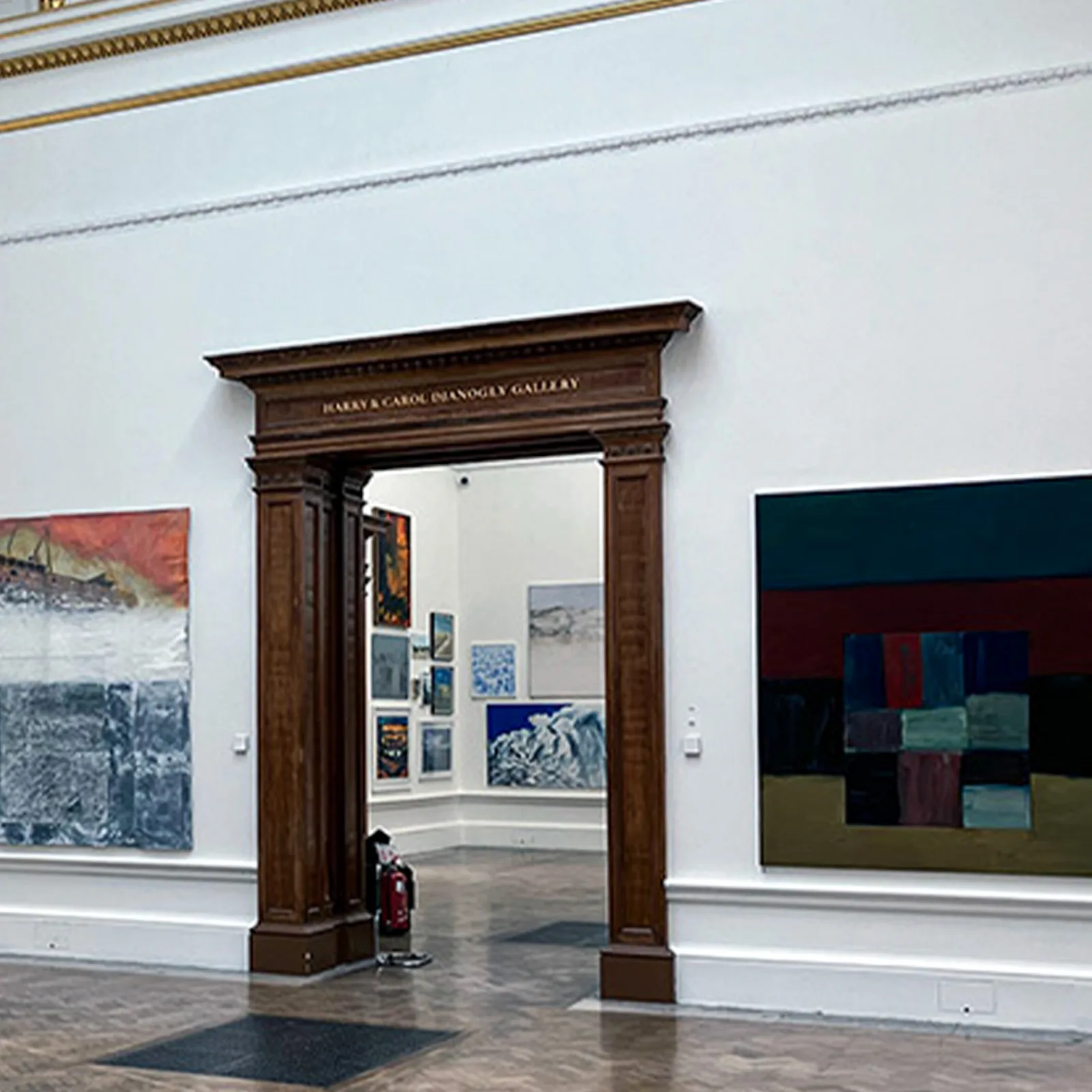
Gallery II
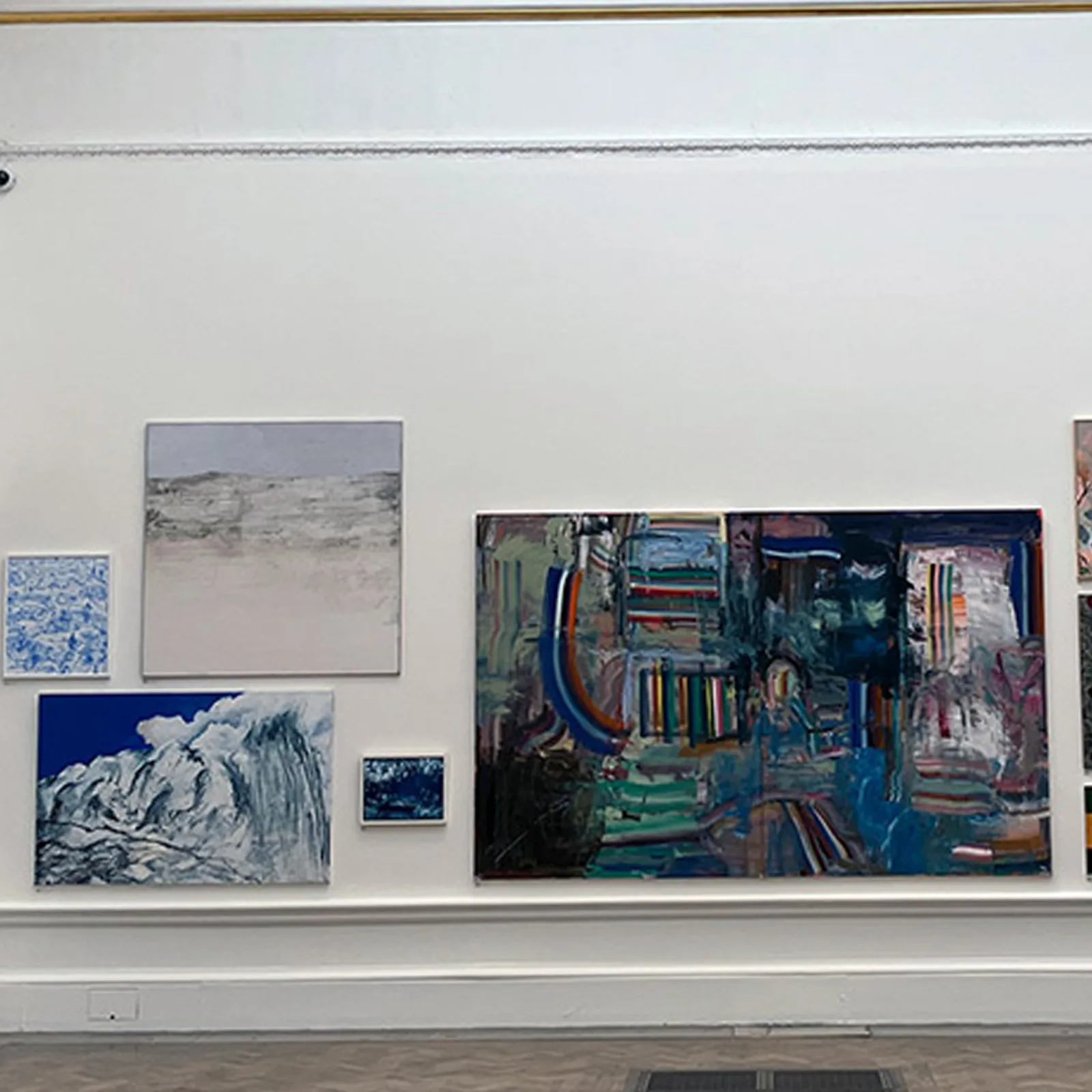
My painting was exhibited in Gallery II, one of the principal exhibition spaces of the 2024 Summer Exhibition.
Each room within the Summer Exhibition is curated individually by a Royal Academician, giving every gallery its own visual rhythm and conceptual identity.
Being included in Gallery II was particularly meaningful because it placed my work within a carefully considered curatorial context rather than simply among a large number of paintings.
One of the remarkable aspects of the Summer Exhibition is the way works by emerging artists coexist with those of internationally recognised Royal Academicians.
This creates unexpected visual conversations and reminds visitors that contemporary art remains an open and evolving field rather than a hierarchy of established names.
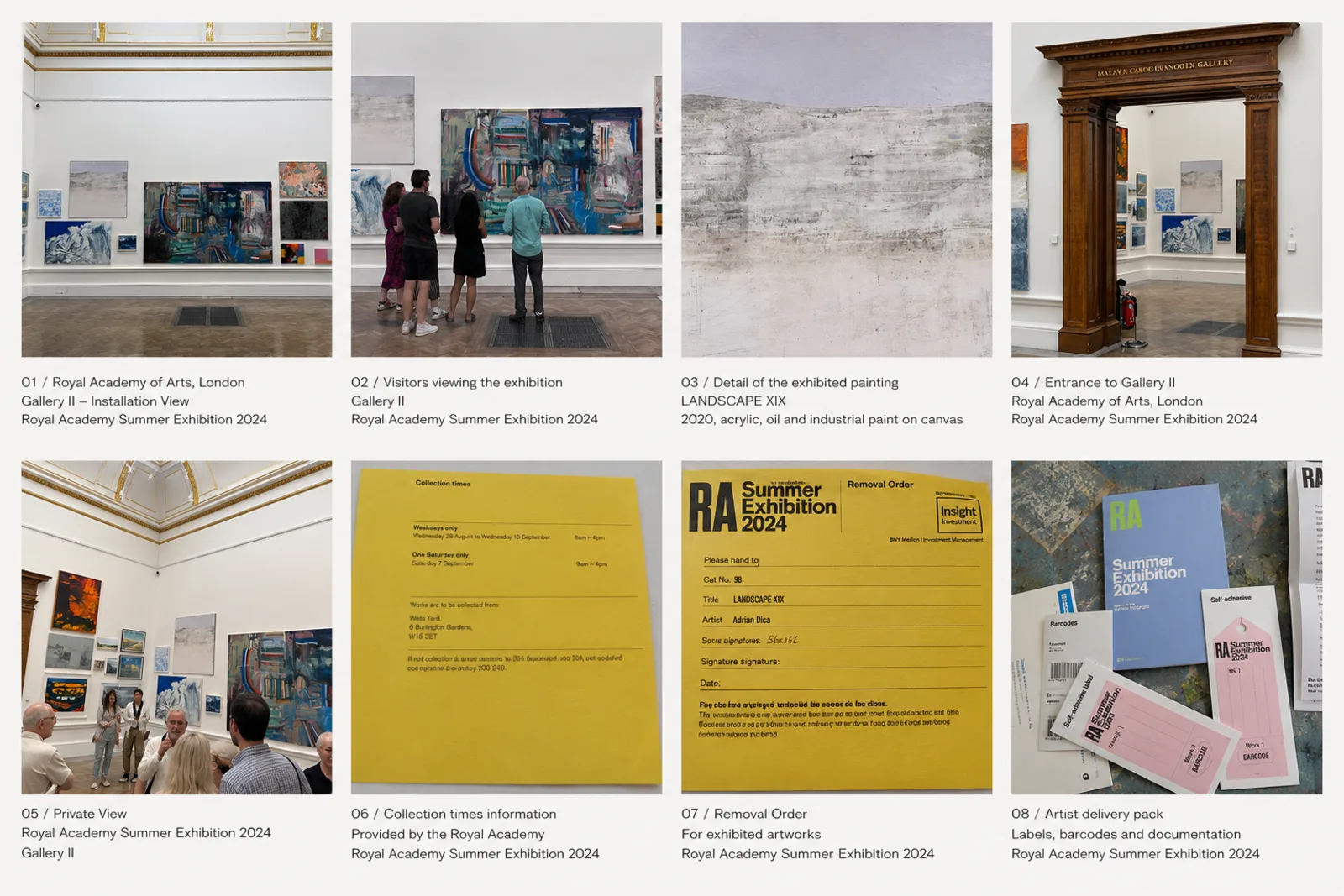
A Painting Leaves the Studio
One lesson every artist eventually learns is that paintings begin a second life once they leave the studio.
Until that moment, the work exists only within the artist's own environment.
Inside a public exhibition, however, it becomes independent.
Visitors bring their own experiences, memories and interpretations.
Collectors respond emotionally rather than analytically.
Curators position the work within broader narratives.
The artist no longer controls the conversation.
Watching people stop in front of my painting, spend time looking at it and discuss it among themselves was one of the most rewarding aspects of the entire exhibition.
Those moments reminded me that paintings ultimately belong to the relationship they create with viewers.
An Unexpected Moment
As the evening progressed, conversations moved naturally between artists, visitors and collectors.
The atmosphere remained energetic but remarkably relaxed.
Then came a moment I had not anticipated.
During the Private View, my painting was acquired by a collector for £6,000, before the exhibition had officially opened to the general public.
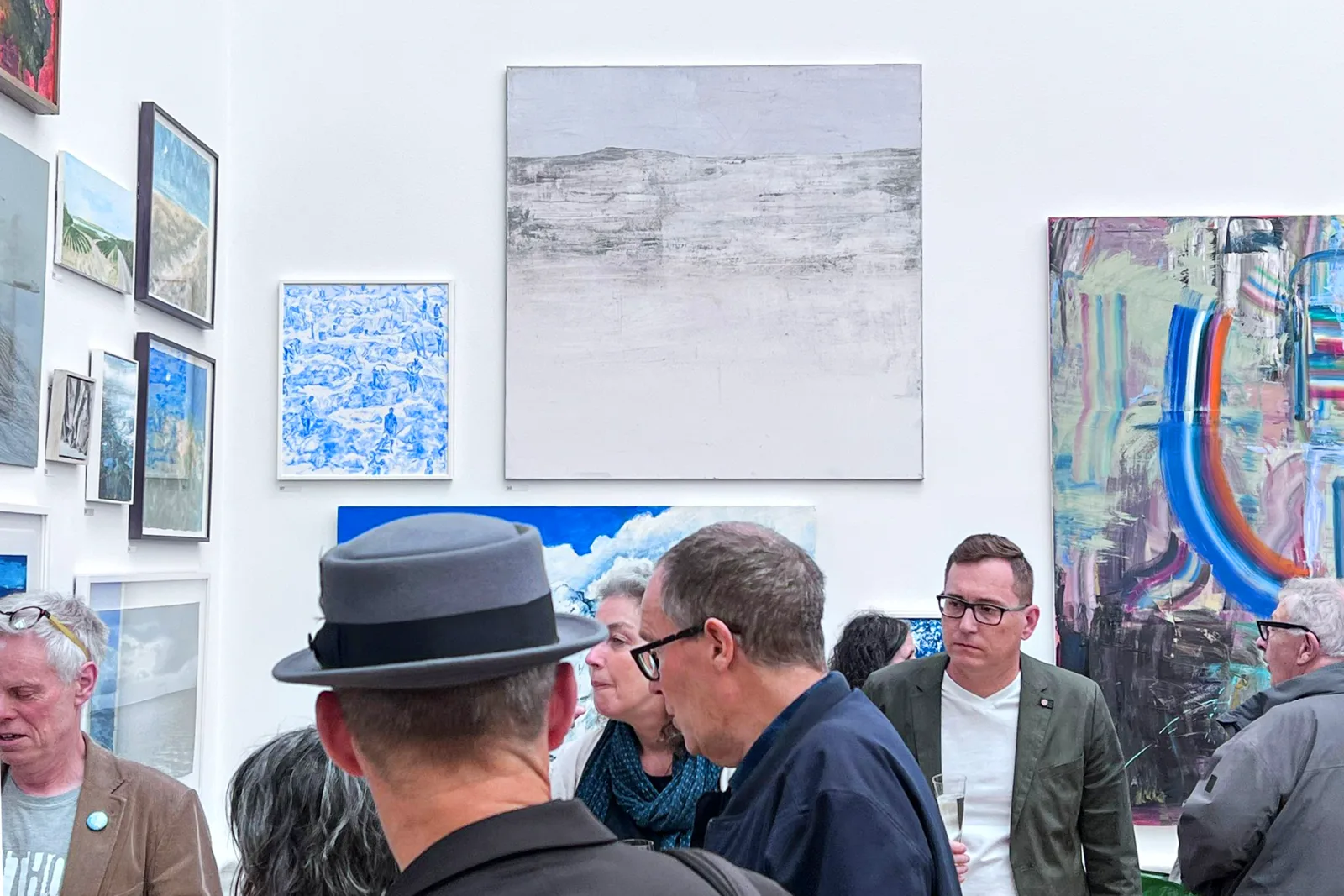
It is difficult to describe what such a moment feels like.
Every artist understands that selling a work is never guaranteed.
A painting may remain in the studio for years or find its collector almost immediately.
This time, everything happened during the very first evening.
More Than a Sale
Although the financial aspect naturally attracts attention, the sale itself was not the most important outcome of the experience.
What mattered far more was the knowledge that someone had connected deeply enough with the painting to decide to live with it.
Collectors do not simply purchase objects.
They choose works that become part of their daily lives, their homes and, in many cases, their personal histories.
For an artist, this represents one of the most meaningful forms of dialogue that art can create.
The sale also confirmed something I had gradually come to understand throughout my career: consistency matters.
The painting exhibited at the Royal Academy was not the result of a few successful months.
It represented years of research, experimentation, failed attempts, revisions and continuous studio practice.
Looking Back
When I think about that evening today, the memory is not defined by the sale alone.
I remember walking through the galleries.
I remember seeing visitors discovering the exhibition for the first time.
I remember conversations with artists from different countries.
I remember the atmosphere of Burlington House filled with contemporary art created by hundreds of individuals who had each followed very different paths to reach the same exhibition.
Those experiences remain just as valuable as any professional recognition.
What the Summer Exhibition Really Offers
It is tempting to see the Summer Exhibition simply as an opportunity for visibility.
In reality, it offers something much more significant.
It creates a temporary community.
Artists, collectors, curators, critics and visitors all become part of the same conversation.
For a few weeks each year, the Royal Academy becomes one of the most vibrant meeting points for contemporary art in London.
Being part of that conversation was, for me, the greatest achievement of participating in the exhibition.
Looking Ahead
Participating in the Royal Academy Summer Exhibition did not feel like reaching a destination.
Instead, it felt like opening a new chapter.
The experience reinforced my belief that sustained artistic research, patience and consistency remain more valuable than short-term visibility.
It also strengthened my determination to continue developing my practice with the same commitment that led to this opportunity in the first place.
What I Learned from the Royal Academy Summer Exhibition
Looking back, I do not consider the sale of my painting to have been the most important outcome of participating in the Royal Academy Summer Exhibition.
The true value of the experience lies elsewhere.
It lies in the opportunity to present my work within one of the world's most respected artistic institutions, to engage in conversations with artists, curators and collectors from different countries, and to realise that years of consistent studio practice can resonate far beyond the place where the work was created.
For independent artists, moments like these offer something that is difficult to measure.
They provide perspective.
They confirm that perseverance, authenticity and a clear artistic language remain relevant in an increasingly competitive international environment.
Advice for Artists Considering Applying
If you are thinking about submitting work to a future edition of the Royal Academy Summer Exhibition, my advice is simple:
- Spend more time developing your artistic practice than preparing your application — the quality of the work will always remain the most important part of the process
- Read the submission guidelines carefully and allow enough time to organise transportation, insurance and documentation
- Do not become discouraged if you are not selected immediately — the Summer Exhibition receives thousands of submissions every year, and many successful artists have applied more than once before exhibiting
Beyond the Exhibition
The Royal Academy Summer Exhibition is often perceived as a destination.
For me, it became a point of departure.
Returning to the studio after the exhibition, I realised that the experience had not changed the questions driving my work.
Instead, it strengthened my confidence in continuing to explore them: memory, industrial landscapes, material traces, and the relationship between beauty and decay.
These themes remain at the centre of my practice, and the Summer Exhibition confirmed that they can communicate across cultural boundaries without losing their personal origin.
A Personal Reflection
Every exhibition eventually comes to an end.
The walls are emptied, the paintings return to collectors or studios, and the galleries prepare for the next programme.
What remains are the experiences.
Standing in Gallery II during the Private View, watching visitors engage with my painting and learning that it had been acquired that same evening by a private collector for £6,000, I understood that the work had already begun a new life beyond my studio.
That moment represented much more than a successful sale.
It marked the point at which years of research, experimentation and persistence became part of someone else's personal story.
For any artist, this is perhaps one of the greatest privileges of making art.
Final Thoughts
The Royal Academy Summer Exhibition 2024 became one of the defining milestones of my artistic journey.
It reaffirmed my belief that meaningful artistic practice is built over time through research, discipline and consistency rather than quick recognition.
Exhibiting at the Royal Academy, presenting my work alongside artists from around the world, and seeing the painting acquired during the Private View were deeply rewarding experiences.
Yet the greatest achievement was not the exhibition itself.
It was the confirmation that years spent in the studio, developing a personal visual language, can eventually find their place within an international conversation.
I hope that sharing this experience will encourage other artists to apply, remain patient, and continue building their own practice with confidence and determination. If you'd like to see the paintings referenced in this article, visit my series & works and exhibitions pages, or get in touch about acquisitions and press enquiries.
Frequently Asked Questions
What is the Royal Academy Summer Exhibition?
The Royal Academy Summer Exhibition is the world's longest-running open-submission exhibition, organised annually by the Royal Academy of Arts in London since 1769.
Can artists without gallery representation apply?
Yes. The exhibition is open to both Royal Academicians and artists from around the world who apply through the annual open submission process.
Is being shortlisted the same as being selected?
No. After the digital selection, shortlisted artists must deliver the original artwork to the Royal Academy. Only after the physical review does the Selection Committee make its final decision.
How much did participating cost?
My total expenses were approximately £500, including the entry fee, international transport and insurance. Travel and accommodation are additional costs that artists should also consider if they plan to attend the exhibition.
Would I recommend applying?
Absolutely. Even if your work is not selected, preparing an application encourages you to evaluate your practice professionally. If you are selected, the experience extends far beyond exhibiting a single artwork — it becomes an opportunity to connect with one of the world's most important artistic communities.
Useful Resources
- Royal Academy of Arts — the institution's official site
- Royal Academy Summer Exhibition — the exhibition's official page, with entry information
- Summer Exhibition FAQ — official frequently asked questions
- Rocket Van — the art transport company I worked with in London
Continue Exploring
If you would like to learn more about my work, you may also be interested in my artist statement, painting series & works, exhibitions, and Studio Notes.