London Art Biennale 2023 — My Experience as a Selected Artist
A first-hand account of exhibiting at the London Art Biennale 2023, from the international open call and selection process to exhibiting at Chelsea Old Town Hall in London.
Introduction
Participating in the London Art Biennale 2023 marked an important milestone in my artistic journey.
Unlike many international exhibitions that rely on invitations or gallery representation, my participation began with a straightforward international open call. I submitted my application online, together with images of my painting, and several weeks later I received an email confirming that my work, Blue Deviation Issue, had been selected for the exhibition.
For an independent artist, moments like these carry particular significance. They demonstrate that a painting can be evaluated on its own merits and become part of an international exhibition through an open and competitive selection process.
In this article, I would like to share both my personal experience and practical information for artists interested in applying to future editions of the London Art Biennale.
What is the London Art Biennale?
The London Art Biennale is an international contemporary art exhibition held every two years at Chelsea Old Town Hall, one of London's most recognisable historic cultural venues.
The Biennale brings together painters, sculptors, photographers and mixed-media artists from around the world, presenting a broad overview of contemporary artistic practice.
One of its defining characteristics is that participation is based on an international open submission process. Artists are invited to submit their work regardless of nationality, age or gallery representation, making the exhibition accessible to both established professionals and emerging artists.
The 2023 edition featured approximately 400 selected artists representing more than 80 countries, creating an exceptionally diverse international exhibition.
Why I Decided to Apply
Over the past several years I have deliberately focused on participating in international open calls and juried exhibitions.
I believe these opportunities provide one of the fairest ways for independent artists to present their work beyond their local art scene. Unlike invitation-only exhibitions, international open calls begin with the artwork itself. The selection committee evaluates the submitted work rather than an artist's professional network or gallery representation.
This approach strongly appealed to me. At the time, my practice had become increasingly focused on memory, industrial landscapes and the relationship between beauty and decay. I wanted to understand whether this body of research could communicate effectively within an international context alongside artists from many different cultural backgrounds.
Why International Open Calls Matter
For independent artists, international open calls remain one of the most transparent ways to develop an international career.
They allow artists from different countries to compete under the same conditions, presenting their work directly to professional selection committees. Although the process is highly competitive, it offers something extremely valuable: the possibility of being recognised primarily for the quality and originality of the artwork itself.
This principle continues to make international open calls an important part of my professional practice.
The Application Process
Applying to the London Art Biennale was a straightforward online process.
The application required high-quality images of the artwork, technical information and payment of the submission fee. In my case, the application fee was approximately £40, which covered the evaluation of the submitted work during the selection process.
Once the submission period closed, the Biennale's selection committee reviewed all applications before announcing the final list of participating artists. Several weeks later, I received an email confirming that Blue Deviation Issue had been accepted for the 2023 edition.
Receiving that email marked the beginning of a completely new stage of preparation.
Choosing the Painting
Selecting which painting to submit required careful consideration.
Rather than choosing my most recent work, I selected Blue Deviation Issue, a painting that I felt represented the direction of my practice most clearly. The work forms part of an ongoing investigation into memory, industrial landscapes and the emotional traces left by human activity.
Instead of documenting specific places, the painting transforms fragments of reality into spaces of reflection, where colour, material and atmosphere become vehicles for exploring time and remembrance.
Looking back, I remain convinced that selecting the work that most honestly represented my artistic language was the right decision. International exhibitions reward authenticity far more than they reward novelty.
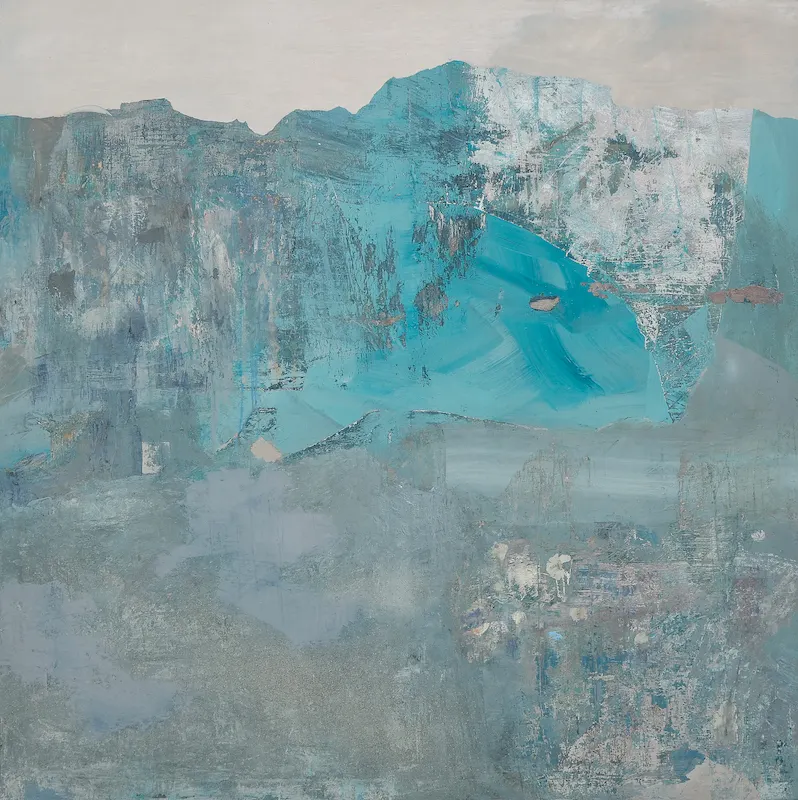
Being selected for the London Art Biennale was already a significant achievement, but the acceptance email did not represent the end of the process. The painting still needed to be prepared, transported internationally and installed at Chelsea Old Town Hall before the exhibition opened to the public — as with every international exhibition, much of the work happens long before visitors enter the gallery.
Preparing for the Exhibition
Receiving the email confirming my participation marked the beginning of a completely different stage of the journey.
Until then, the focus had been entirely on the application itself. Once selected, my attention shifted towards preparing the painting for international transport and ensuring that it would arrive safely in London before the exhibition installation.
Although these practical aspects often receive little attention, they are an essential part of exhibiting professionally abroad. A successful international exhibition depends not only on the quality of the artwork, but also on careful planning, organisation and attention to detail.
Preparing the Painting
Every painting begins its life inside the studio, but exhibiting internationally requires thinking beyond the creative process.
Before shipping the work, I carefully inspected the painting, checked the hanging system and prepared appropriate protective packaging for international transport.
Professional presentation extends beyond the artwork itself. The condition in which a painting arrives is equally important, especially when it is travelling hundreds or even thousands of kilometres before reaching the exhibition venue.
For independent artists, these practical responsibilities are simply part of professional practice.
Shipping the Artwork to London
Once the painting was ready, the next step was organising its transport to London.
Unlike larger institutional exhibitions where transportation may be arranged by museums or galleries, participating in an international open-call exhibition means that artists are generally responsible for organising the shipment of their own work.
Although international shipping always involves a degree of uncertainty, careful planning and allowing sufficient time before the installation period helped ensure that everything proceeded smoothly.
Fortunately, the painting arrived safely in London and was ready for installation before the exhibition opened.
Chelsea Old Town Hall
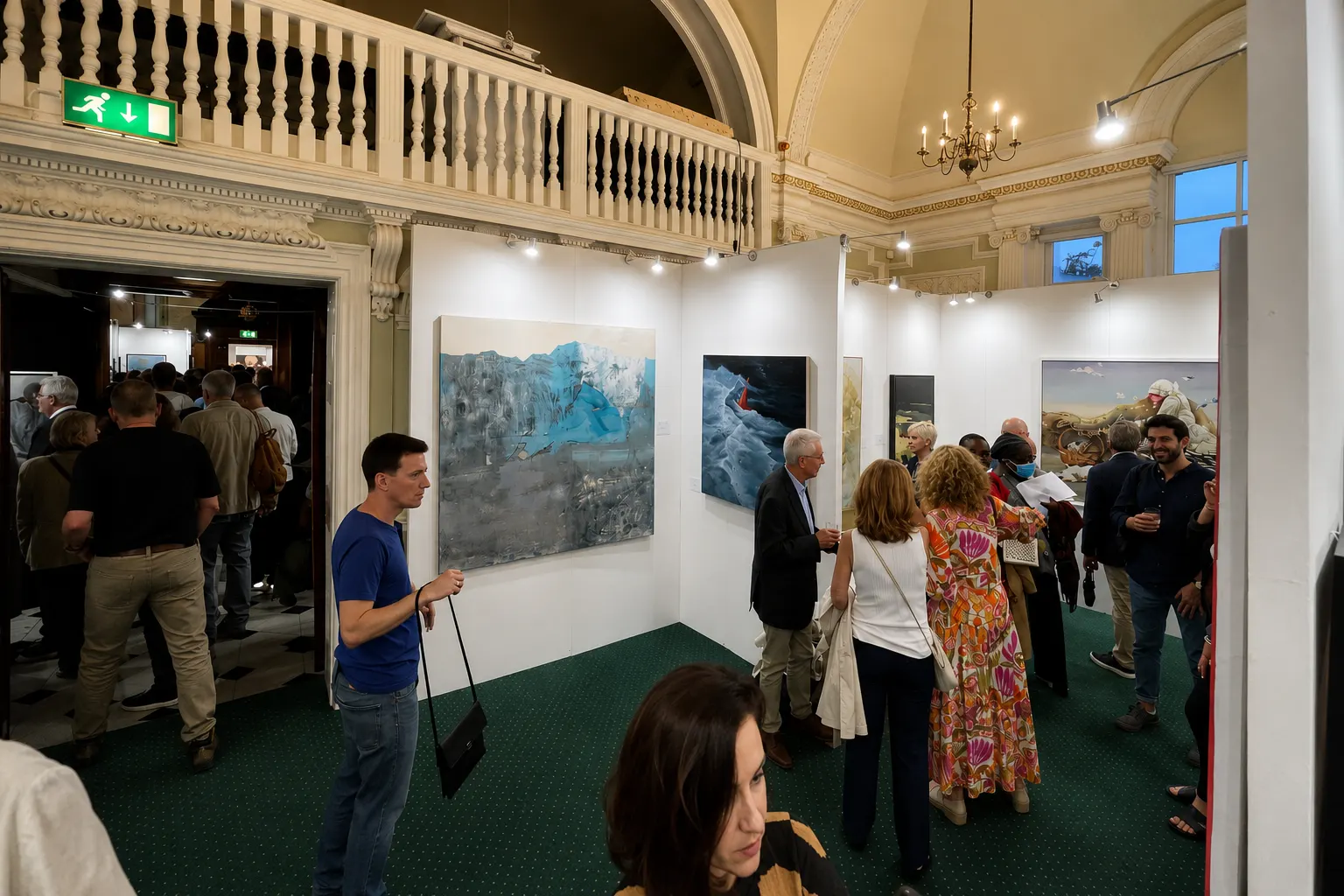
The London Art Biennale 2023 was hosted at Chelsea Old Town Hall, an iconic Grade II listed building situated on King's Road in the Royal Borough of Kensington and Chelsea.
Originally opened in 1908, the building has long served as one of London's most important civic and cultural venues. Today it regularly hosts exhibitions, art fairs and cultural events, making it a fitting location for an international contemporary art exhibition.
Walking through the building for the first time, I was immediately struck by its atmosphere. The combination of historic architecture, elegant interiors and carefully designed exhibition spaces creates an environment that encourages visitors to spend time with each artwork rather than simply moving from one piece to the next. The venue itself becomes part of the exhibition experience.
Installation
By the time I arrived, the installation was already well underway.
Curators, technicians and organisers were carefully positioning hundreds of artworks throughout the exhibition spaces, transforming the historic building into a temporary international meeting place for contemporary art.
Watching the exhibition gradually take shape was fascinating. Paintings, sculptures and mixed-media works from artists representing dozens of countries slowly formed a coherent exhibition despite their enormous diversity.
One of the strengths of the London Art Biennale is precisely this balance between difference and unity. Every artwork retains its own identity while simultaneously contributing to a much larger international conversation.
Seeing My Painting Installed
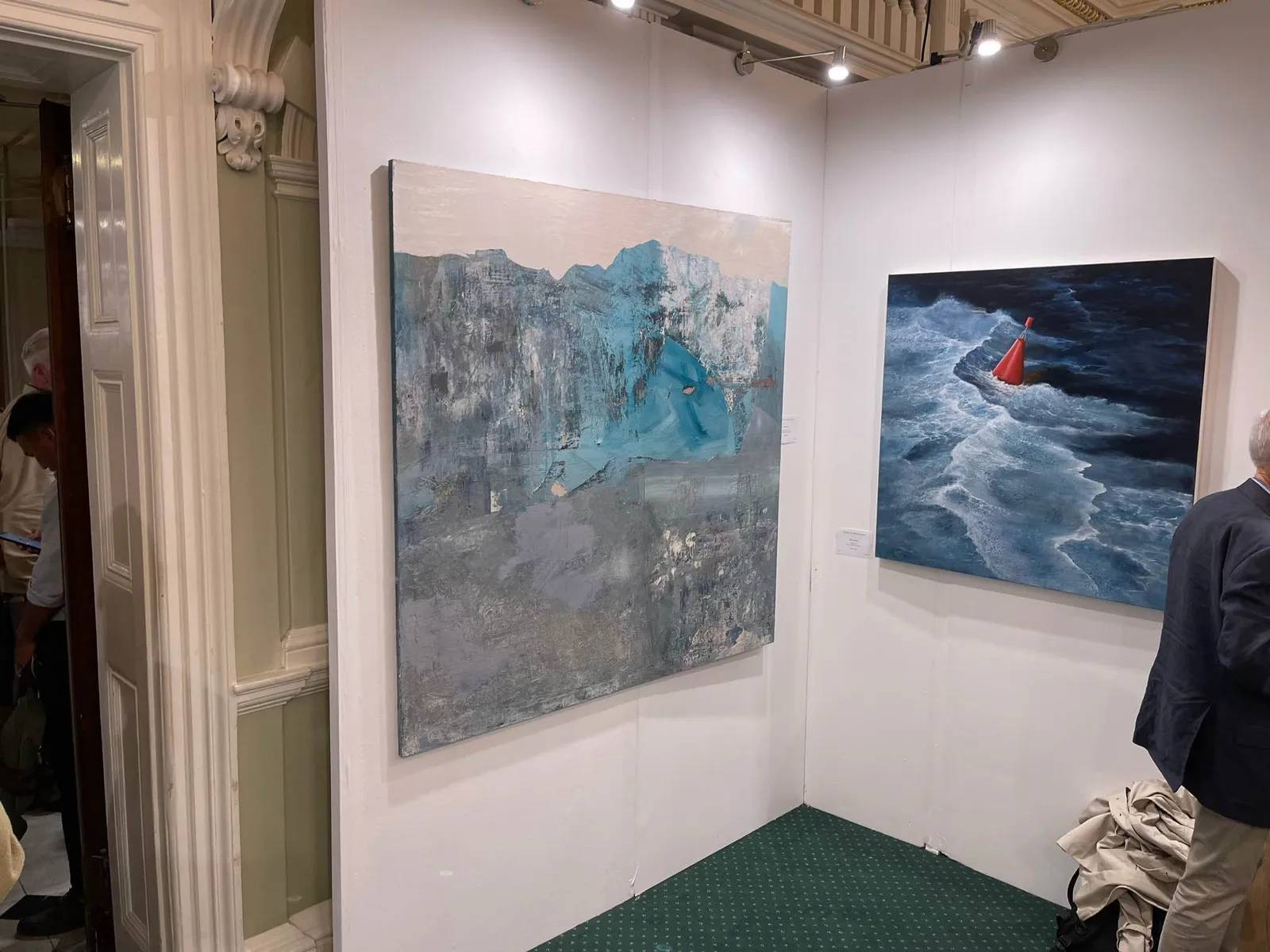
There is always a unique moment when an artist first encounters a completed installation. Until then, the painting has existed only within the familiar surroundings of the studio.
Seeing Blue Deviation Issue installed in Chelsea Old Town Hall fundamentally changed my perception of the work. The painting no longer existed in isolation. It entered into dialogue with neighbouring works, different artistic approaches and visitors from around the world.
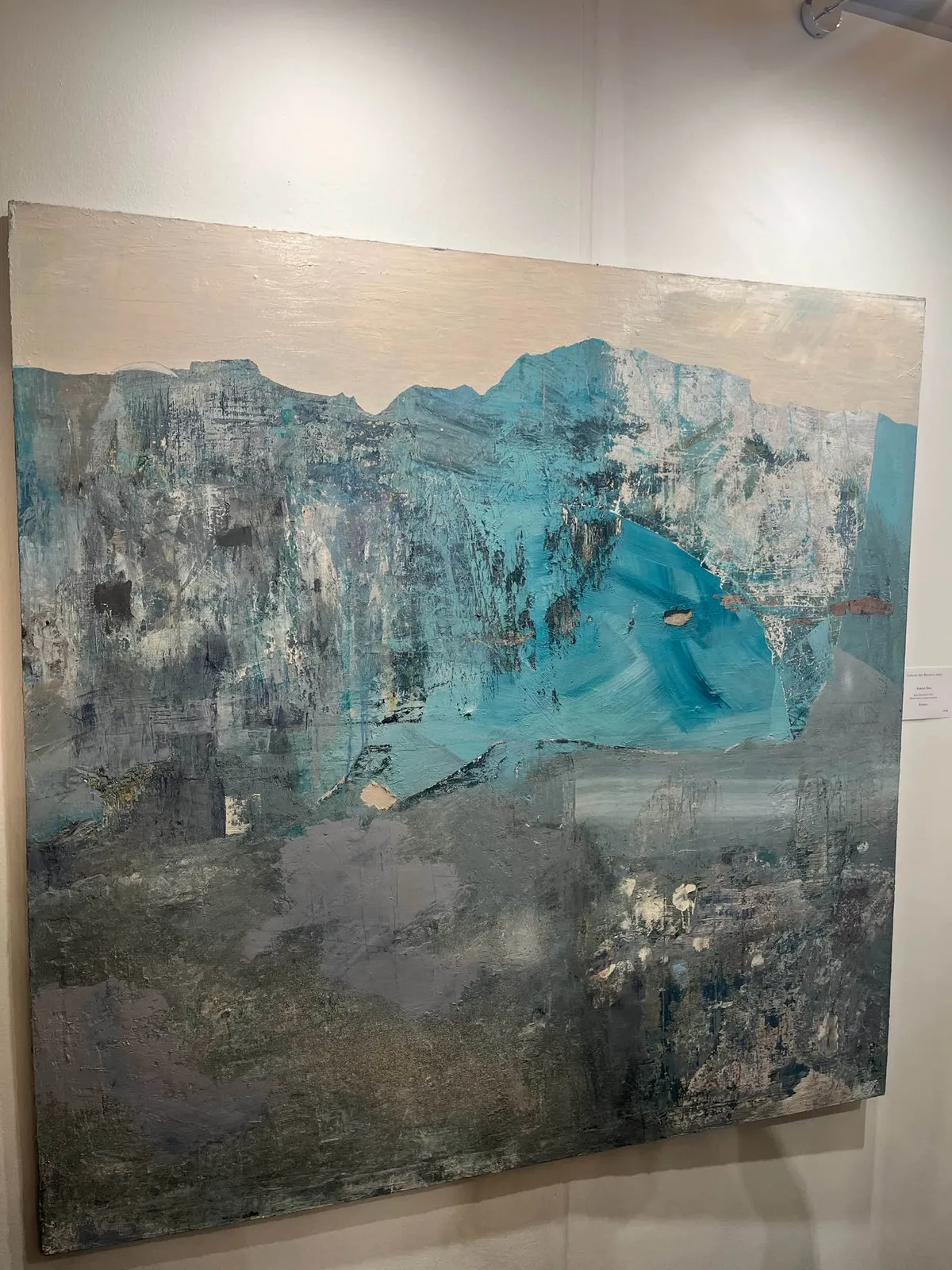
Experiencing the work within this new context reminded me that paintings continue to evolve long after they leave the studio. Their meaning is constantly shaped by the spaces they inhabit and by the people who encounter them.
An International Community
Perhaps the most valuable aspect of the London Art Biennale is not simply the exhibition itself but the international community it temporarily creates.
The 2023 edition brought together approximately 400 artists representing more than 80 countries, each bringing different artistic traditions, experiences and perspectives. Despite these differences, every participant shared a common commitment to visual expression.
Conversations naturally moved between painting techniques, conceptual ideas, exhibition experiences and future projects. For me, these exchanges became one of the most rewarding aspects of participating.
International exhibitions are not only places where artworks are displayed. They are also places where artists learn from one another.
Preparing, transporting and installing the painting taught me something important: professional artistic practice extends far beyond making artworks. It also involves understanding how to present, protect and communicate those works within an international context. This experience reinforced the importance of treating every stage of the process — from the application to the installation — with the same level of care and commitment.
Opening Day
The opening of the London Art Biennale 2023 marked the moment when months of preparation finally became a public experience.
Until then, the exhibition had existed only through emails, logistics, installation schedules and the quiet work taking place behind the scenes. Once the doors opened, the paintings no longer belonged solely to the artists who had created them. They became part of an ongoing conversation with visitors, collectors, fellow artists and art professionals from around the world.
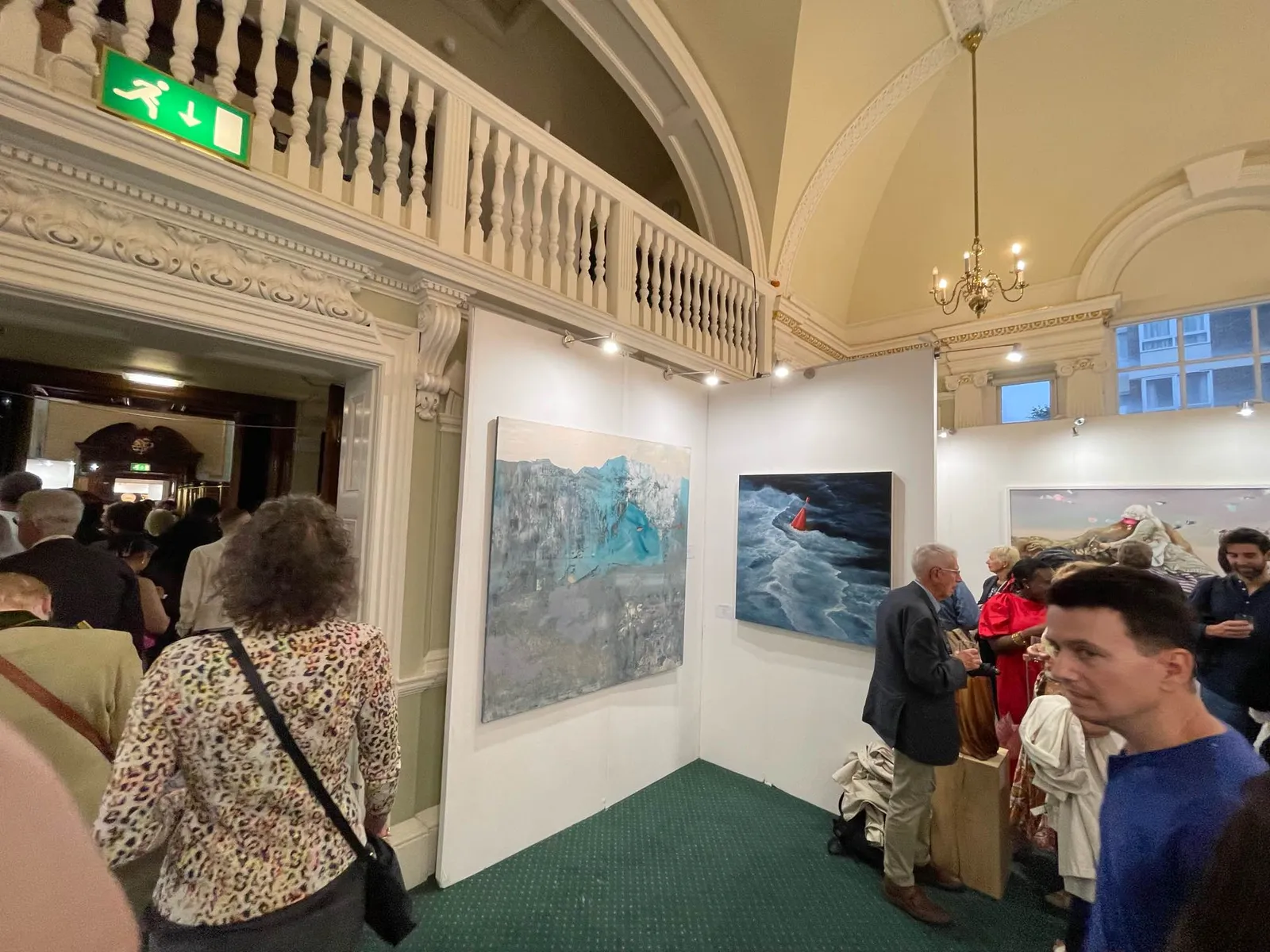
For me, this transformation is one of the most rewarding aspects of exhibiting internationally.
Experiencing the Exhibition as an Artist
There is a significant difference between creating a painting in the studio and encountering it within an international exhibition.
Inside the studio, every decision is made in isolation. Lighting, scale, colour and composition are all experienced within a familiar environment. Inside the Biennale, however, the work begins to exist independently. It enters into dialogue with neighbouring paintings, different artistic approaches and hundreds of visitors who bring their own experiences and interpretations.
Seeing Blue Deviation Issue installed among works by artists from more than eighty countries allowed me to look at my own painting from an entirely new perspective. It no longer felt like an isolated object. It had become part of a much broader visual conversation.
Conversations Beyond Language
One of the most memorable aspects of the London Art Biennale was meeting artists from many different cultural backgrounds.
Although our practices varied considerably, the conversations often returned to similar questions. How do we develop a personal artistic language? How do we remain authentic while working within an increasingly global art world? How does painting continue to remain relevant today?
These discussions reminded me that contemporary art is not defined by geography. Artists may work in different countries and cultural contexts, yet many of the fundamental questions remain surprisingly similar.
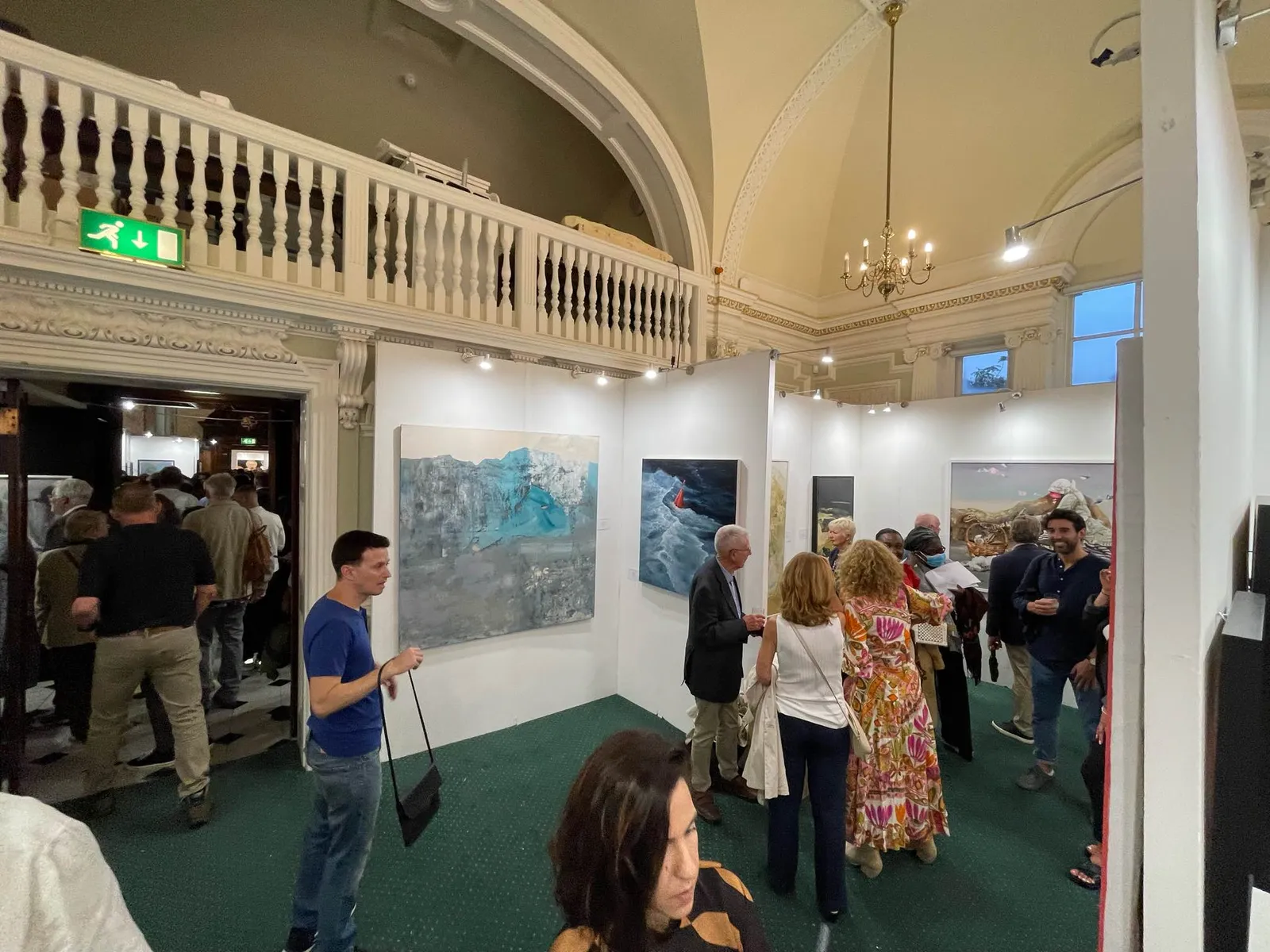
The Value of an International Exhibition
Participating in an international exhibition offers something that cannot be replicated through digital platforms alone.
Photographs and websites can introduce an artwork to audiences around the world, but nothing replaces the experience of seeing paintings in person. Visitors spend time with the work. They move closer. They step back. They notice surface, texture, scale and material qualities that cannot be fully communicated through a screen.
Watching people engage with my painting in this way reminded me why physical exhibitions continue to play such an important role in contemporary art.
Beyond Visibility
Many artists understandably focus on the visibility that international exhibitions provide. While visibility is certainly valuable, I believe the long-term benefits are far more significant.
Events such as the London Art Biennale encourage artists to think professionally about every aspect of their practice: preparing applications, documenting artworks, managing logistics, presenting work internationally, and meeting fellow artists and art professionals. Each of these experiences contributes to professional growth in ways that are difficult to measure immediately.
For me, the Biennale became part of a much longer process rather than an isolated achievement.
Looking at My Practice from a Distance
Travelling to London also offered something unexpected: distance.
Leaving the studio and encountering my work in a completely different environment allowed me to reflect on my practice more objectively. The themes that have occupied me for many years — memory, industrial landscapes, traces of human activity and the fragile coexistence of beauty and decay — felt just as relevant in an international context as they did when they first emerged in my studio.
That realisation strengthened my confidence in continuing to develop this direction rather than attempting to adapt my work to temporary artistic trends.
What the Biennale Meant to Me
Looking back today, I do not see the London Art Biennale simply as another exhibition listed on my CV. I see it as one of the experiences that confirmed the importance of patience and consistency.
International recognition rarely arrives suddenly. It is usually the result of years spent developing a coherent body of work, refining ideas and remaining committed to a personal artistic language. The Biennale became one of the moments that reassured me that this long-term approach was worth pursuing.
Returning to the Studio
Every exhibition eventually ends. The paintings leave the gallery, the visitors return home and the exhibition spaces prepare for the next event. For the artist, however, the experience continues.
Returning to my studio after the London Art Biennale, I realised that the exhibition had not changed the questions driving my work. Instead, it had strengthened my belief that these questions deserved to be explored further.
Every international exhibition becomes part of the ongoing dialogue between the studio and the outside world. For me, London Art Biennale 2023 became another important chapter in that conversation, and it reinforced my belief that meaningful artistic practice is built gradually through research, consistency and openness to dialogue — encouraging me to continue applying to international exhibitions and open calls in the years that followed.
Lessons I Took from the London Art Biennale
Looking back, participating in the London Art Biennale 2023 represented much more than exhibiting a single painting in London.
It became an important reminder that artistic development is built over time. Open calls, international exhibitions and biennales do not create an artist overnight. Rather, they reveal years of studio practice that often remain invisible to the public.
For me, being selected confirmed that the questions driving my work — memory, industrial landscapes, traces of human presence and the relationship between beauty and decay — could communicate beyond the cultural environment in which they originated. This realisation has remained one of the most valuable outcomes of the experience.
Advice for Artists Considering Applying
If you are thinking about applying to a future edition of the London Art Biennale, I would offer a few simple recommendations based on my own experience.
First, focus on developing your artistic practice before thinking about exhibitions. International exhibitions are not shortcuts to success. They are opportunities to present work that has already reached a certain level of maturity.
Second, invest time in documenting your artwork professionally. The selection committee encounters hundreds of submissions, and high-quality photographs are essential during the initial evaluation.
Third, choose the painting that best represents your artistic language rather than trying to predict what the jury might prefer. Authenticity is far more convincing than strategy.
Finally, give yourself enough time to organise transportation and every practical aspect of participation. Good preparation allows you to concentrate on the experience itself rather than unnecessary logistical problems.
Is the London Art Biennale Worth It?
Based on my own experience, I would answer without hesitation: yes.
Not simply because it provides international visibility. Its greatest value lies in becoming part of a genuinely international artistic environment. For a few days, artists from dozens of countries share the same exhibition, exchange ideas, discuss their practices and observe how contemporary art is approached in different parts of the world. Those conversations remain valuable long after the exhibition closes.
The Biennale also encourages artists to think professionally about every aspect of their practice — from documentation and presentation to communication and long-term career development.
A Personal Reflection
One of the most rewarding aspects of participating in the London Art Biennale was realising that paintings eventually develop lives of their own.
Inside the studio, every decision belongs to the artist. Once the work enters an exhibition, however, it becomes part of countless individual interpretations. Visitors bring their own memories, cultural backgrounds and emotional responses. The painting no longer belongs exclusively to its creator. Instead, it becomes a meeting point between different experiences.
For me, this remains one of the most meaningful aspects of exhibiting internationally.
Beyond This Exhibition
Although the London Art Biennale was an important milestone, I have never considered it a final destination. Every exhibition leads back to the studio. The questions remain the same. Only the perspective changes.
Participating in the Biennale encouraged me to continue presenting my work internationally and reinforced my belief that meaningful artistic practice is built through patience, consistency and continuous research rather than through isolated achievements.
Conclusion
The London Art Biennale 2023 became one of the defining experiences of my artistic career.
Being selected through an international open call and exhibiting alongside artists representing more than eighty countries confirmed that a personal artistic language can communicate across cultural boundaries without losing its authenticity.
The experience strengthened my commitment to painting as a form of long-term research rather than short-term production. Looking back, I do not see the Biennale simply as an exhibition. I see it as part of an ongoing conversation between the studio, the artwork and an international audience — a conversation that continues to shape my practice today.
This article reflects my personal experience as a participating artist in the London Art Biennale 2023. It is not an official guide to the exhibition. For the latest information regarding submissions, deadlines and participation requirements, please consult the official London Art Biennale website.
FAQ
What is the London Art Biennale?
The London Art Biennale is an international contemporary art exhibition held every two years at Chelsea Old Town Hall in London, bringing together artists selected through an international open submission process.
How do artists apply?
Applications are submitted online through the Biennale's official website. Artists upload images of their artwork together with technical information and complete the submission process before the published deadline.
Do artists need gallery representation?
No. One of the strengths of the London Art Biennale is that independent artists can apply directly without representation by a gallery.
How much did it cost to apply?
When I applied for the 2023 edition, the submission fee was approximately £40. Artists should always consult the official website, as fees and submission requirements may change from one edition to another.
How many artists participated?
The 2023 edition brought together approximately 400 artists representing more than 80 countries, making it one of the most internationally diverse contemporary art exhibitions held in London.
Would I recommend applying?
Absolutely. For independent artists seeking international exposure, the London Art Biennale offers not only an exhibition opportunity but also valuable professional experience, international connections and the chance to present their work within a respected contemporary art context.
Useful Resources
- London Art Biennale — the event's official site
- My Official Artist Page — my listing among the biennale's selected artists
- 2023 Selected Artists — the full list of artists selected for the 2023 edition
- About the Biennale — background on the event and its selection process
- Chelsea Old Town Hall — the venue's official page
Continue Reading
- Royal Academy Summer Exhibition 2024 — My Experience — my account of a related open-call exhibition
- Series & Works — my archive of paintings, including Blue Deviation Issue
- Artist Statement — my background and artistic practice
- Exhibitions — a full record of past and upcoming exhibitions
- Studio Notes — more first-hand accounts from the studio
- Contact — get in touch about my work
Editorial note: this article reflects my personal experience as a participating artist in the London Art Biennale 2023. It is not an official guide to the exhibition. For the latest information regarding submissions, deadlines and participation requirements, please consult the official London Art Biennale website.